

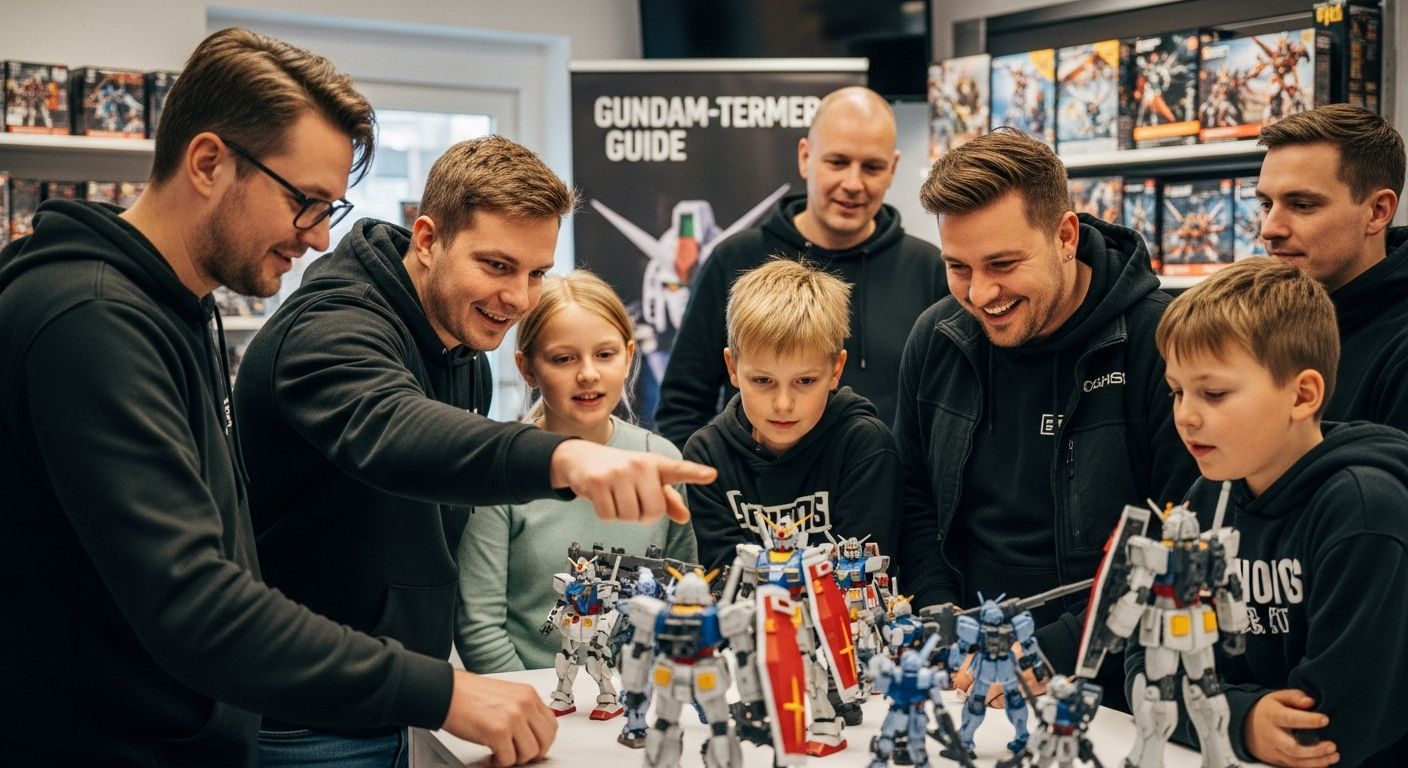
The world of Gundam is full of mysterious concepts and technical terms. Did you know that a Perfect Grade Gundam model can contain over 500 parts and take several months to build? Most people think it's just about plastic and glue. In fact, every term and model grade opens up a whole new world of creativity and collecting passion.
Table of Contents
- What do common Gundam terms mean?
- Kits and Models: Terms You Must Know
- Cosplay and Games: Gundam Concepts for Fans
Quick Summary
| Takeaway | Explanation |
|---|---|
| Understand basic Gundam terms | Familiarizing yourself with terms is crucial for collectors and hobbyists for a better experience. |
| Divide models into grades | Models are classified as HG, MG, and PG, helping you choose the right level. |
| Master techniques like masking and weathering | These advanced techniques enhance the details of the paintwork and give a more authentic look. |
| Explore cosplay and game terms | Understanding cosplay and game-specific terms enriches your experience of Gundam culture. |
| Use and modify Conversion Kits | Conversion Kits allow you to customize and create unique versions of your Gundam models. |
What do common Gundam terms mean?
Understanding common Gundam terms is crucial for all collectors and hobbyists who want to delve into the world of Gundam models. These terms are not just about language but about an entire cultural and technical vocabulary that defines this fascinating hobby.
Gunpla Model Grades: From Beginner to Expert
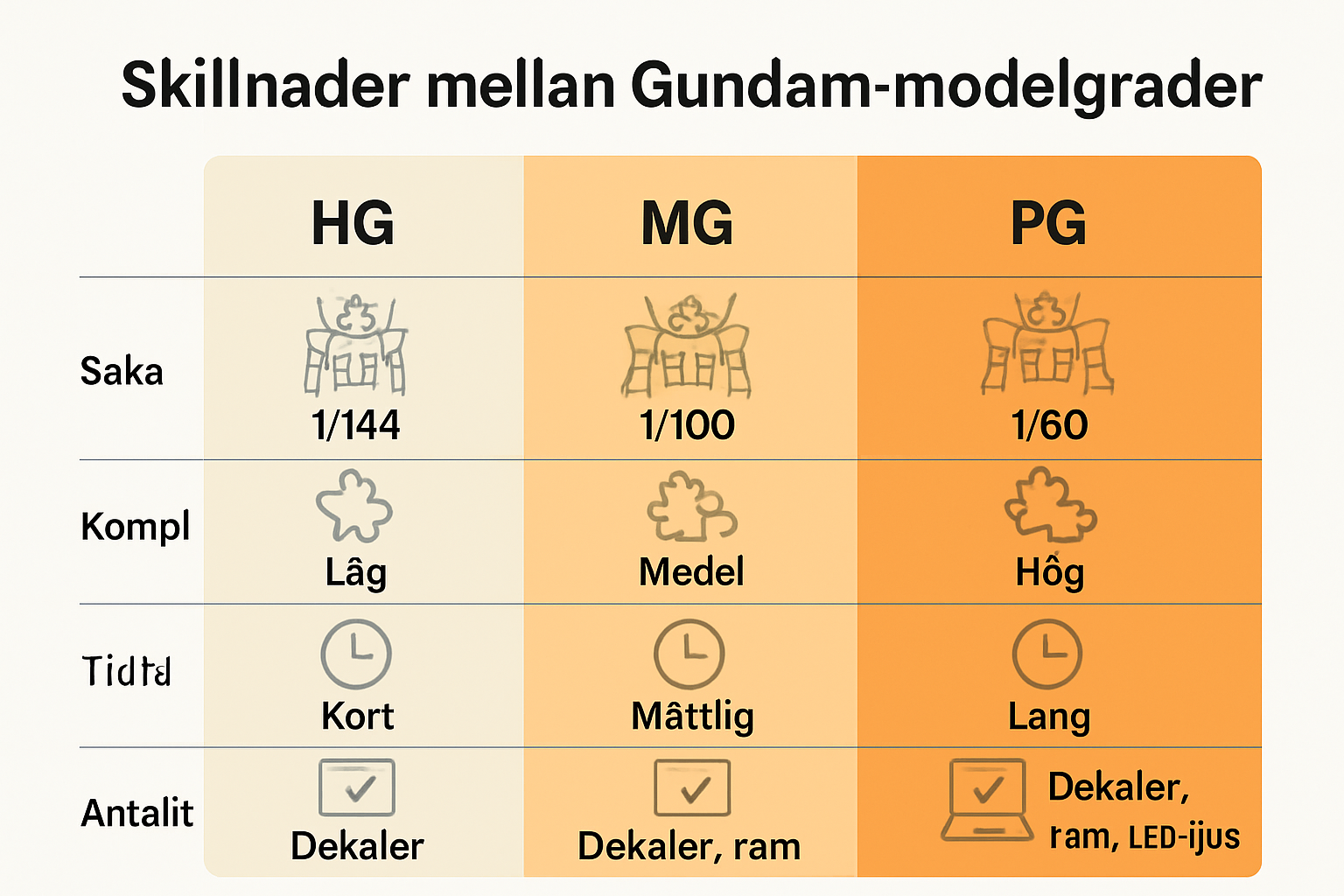
In the Gundam world, models are classified by different grades that represent complexity and detail level. High Grade (HG) is perfect for beginners – these models are less complex, affordable, and easy to build. They are usually in 1:144 scale and offer an excellent way to get started with model building.
Master Grade (MG) models are more advanced. They are in 1:100 scale and contain significantly more details and movable parts. For experienced builders who want more challenging projects, these models are ideal. Each MG model often has internal skeleton structures and more complex building instructions that require accuracy and technical skill.
The most exclusive models are called Perfect Grade (PG). These extraordinary models represent the top level in Gundam model building. With enormous sizes (often 1:60 scale) and incredibly detailed components, PG models are true masterpieces that can take months to complete.
To help you understand the differences between the most common Gunpla model grades, below is a comparison table of High Grade (HG), Master Grade (MG), and Perfect Grade (PG):
| Model Grade | Scale | Difficulty | Number of parts/complexity | Recommended for |
|---|---|---|---|---|
| High Grade (HG) | 1:144 | Low (beginner) | Fewer parts, simpler construction | Beginners |
| Master Grade (MG) | 1:100 | Medium-advanced | More details, internal skeleton | Experienced builders |
| Perfect Grade (PG) | 1:60 | Advanced | Over 500 parts, highly detailed | Experts/collectors |
Technical Terms and Building Techniques
As you delve into the world of Gundam, you will encounter specific technical terms that define various aspects of model building. Masking is a technique where certain areas are covered to protect them during painting, allowing for precision and sharp color transitions. Learn more about advanced modeling methods to improve your skills.
The term Monoeye refers to mobile suits with a single camera lens system, which is common in certain Gundam series. This design element has both aesthetic and narrative significance within the franchise.
Another important term is Conversion Kit, a special accessory that allows you to modify an existing Gundam model and give it new functions or appearances. These kits are particularly popular among experienced collectors who want to create unique versions of their models.
Cultural Context and Terminology
Gundam terms are more than just technical descriptions - they represent a rich narrative tradition and design philosophy. Each term carries stories of technological innovation, human conflict, and creative design. Learning these terms is not just about understanding words but about absorbing an entire subculture of model building and storytelling.
Whether you are a beginner or an experienced collector, understanding these common Gundam terms will deepen your appreciation and enjoyment of this fascinating hobby. Each term is a key that opens the door to a more detailed and engaging modeling experience.
Here, important technical terms and building techniques mentioned in the article are organized so you can quickly get an overview of their meaning:
| Term | Meaning |
|---|---|
| Masking | Covering areas during painting for sharp color transitions |
| Monoeye | Mobile suits with a single camera lens system (aesthetic & narrative function) |
| Conversion Kit | Special parts that modify and customize models |
| Sprue | Plastic frame where all model parts are attached before assembly |
| Nub marks | Small marks left after parts are cut from the sprue |
| OOB (Out of Box) | Model built exactly according to original packaging, without modifications |
| Panel Lining | Painting/drawing thin lines to emphasize details and joints |
| Weathering | Technique to simulate aging, scratches, and wear on the model |
Kits and Models: Terms You Must Know
Understanding the terminology within Gundam model building is crucial for navigating the complex and fascinating world of Gunpla. Each term represents a specific aspect of kits, techniques, and design elements that define this unique hobby.
Basic Kit Terminology
As you embark on your Gunpla journey, you will encounter several important terms that are crucial for your understanding. Sprue is the plastic frame where all model elements are originally attached. Each part must be carefully separated from this frame using precision tools such as side cutters. Nub marks are small marks that remain after you have cut a part from the sprue - these require careful sanding to achieve a professional finish.
The term OOB (Out of Box) refers to kits that are assembled exactly as they are delivered, without any additional modifications or customizations. This is especially common among beginners who want to follow the original design instructions. Explore more details about Gundam model building to deepen your understanding.
Another important term is Conversion Kit, a special accessory that allows you to transform an existing model and give it new functions or appearances. These kits are particularly popular among experienced collectors who want to create unique variations of their models.
Advanced Modeling Techniques
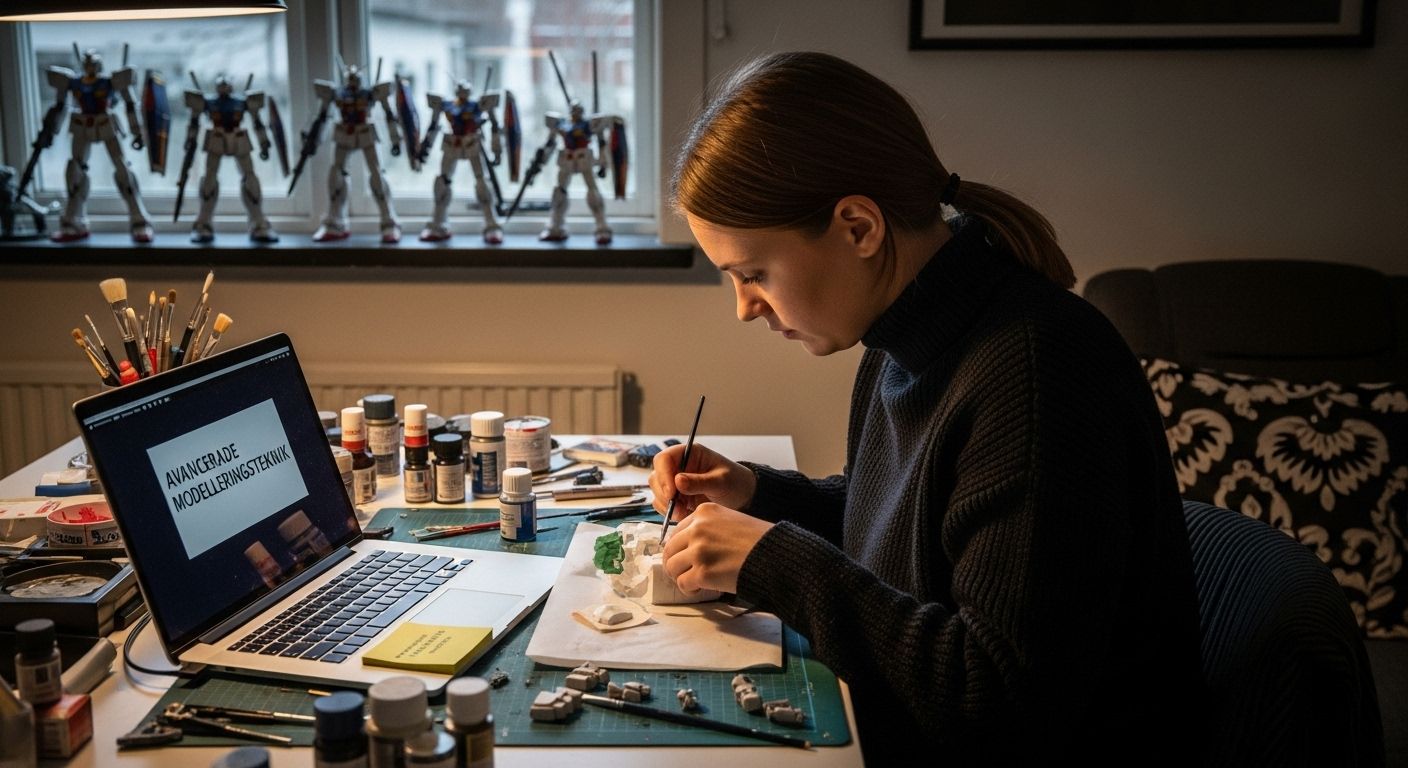
Masking is a sophisticated technique where specific areas are covered to protect them during the painting process. This allows for sharp color transitions and precise detailing. Experienced builders use special tape or specific masking fluids to achieve perfect results.
The term Panel Lining refers to emphasizing model details by painting or drawing thin lines along the joints and panels. This creates depth and dimensionality and makes the model more realistic. The technique can be performed with markers, wash techniques, or specific panel lining paints.
Another advanced term is Weathering, a technique that simulates aging and wear on the model. This includes creating realistic scratches, rust, dirt, and other environmental effects that give the model a more authentic and dramatic appearance.
Cultural and Technical Significance
Gundam terms are more than just technical descriptions - they represent a deep cultural and aesthetic tradition. Each term carries stories of technological innovation, creative design, and storytelling. Learning these terms is not just about understanding words but about absorbing an entire subculture of model building.
Whether you are a beginner or an experienced collector, understanding these kit terms will deepen your appreciation and enjoyment of Gundam model building. Each term is a key that opens the door to more advanced techniques and more engaging modeling experiences.
Cosplay and Games: Gundam Concepts for Fans
The Gundam universe extends far beyond model building and reaches into worlds of cosplay, games, and cultural representation. For fans who want to immerse themselves in this rich subculture, there is a range of specific terms and concepts that are crucial for full understanding and appreciation.
Cosplay Terminology
In the Gundam cosplay world, there is an extensive vocabulary that helps fans communicate and express their creative interpretations. Costume Performance refers to more than just wearing a costume - it's about physically embodying a character's personality, movements, and emotions. Experienced cosplayers carefully study every detail of their chosen mobile suits and characters to create authentic representations.
Armor Crafting is an advanced technique where cosplayers create exact replicas of Gundam suits. This involves using materials such as EVA foam, 3D printed parts, and special paints to build complete costumes that resemble the iconic mobile suits. The process requires great technical skill and creative craftsmanship.
The term Prop Building focuses on creating weapons and accessories that complement the Gundam costume. This includes everything from enormous robot weapons to small, detailed accessories that represent specific series or characters. Explore creative strategies for game design for inspiration for your own projects.
Game Terminology
In Gundam games, there is a series of technical terms that define the game's mechanics and strategic elements. Mecha Combat describes the combat systems where players control mobile suits in complex battle scenarios. These games require quick reflexes, strategic thinking, and a deep understanding of each mobile suit's unique abilities.
Pilot Skills is a critical concept that represents a character's individual skills and potential in combat. Each pilot has unique characteristics such as speed, precision, reaction time, and special abilities that affect the mobile suit's overall performance. Experienced players understand the importance of matching the right pilot with the right mecha.
The term Upgrade Mechanics refers to the systems where players can improve and modify their mobile suits. This can involve upgrading weapon systems, reinforcing armor, or adding special equipment that provides strategic advantages in combat.
Cultural Significance
Gundam concepts in cosplay and games are more than just technical terms - they represent a deep cultural community where fans express their passion and creativity. Each term carries stories of technological fantasy, human ingenuity, and narratives of conflict and hope.
Whether you are an experienced cosplayer, a passionate gamer, or a curious fan, understanding these concepts will give you deeper access to the rich and complex worlds of the Gundam universe. Each term is a key that opens the door to more engaging and meaningful experiences within this fascinating subculture.
Frequently Asked Questions
What is the difference between High Grade (HG), Master Grade (MG), and Perfect Grade (PG) in Gundam models?
High Grade (HG) is simpler and suitable for beginners, while Master Grade (MG) offers more details and is for experienced builders. Perfect Grade (PG) are the most detailed and complex models, usually intended for experts.
What does the term “Masking” mean in Gundam modeling?
Masking involves covering specific areas during painting to protect them, resulting in sharp color transitions and more precise detailing.
What is a “Conversion Kit” and how is it used?
A Conversion Kit is a special accessory that allows you to modify an existing Gundam model, enabling you to change its functions or appearance.
How can I improve my Gundam models with techniques like “Panel Lining” and “Weathering”?
Panel Lining involves painting thin lines to emphasize details, while Weathering simulates aging and wear for a more authentic look, adding depth and realism to the models.
Make your Gundam dreams a reality with Robotto.se
Are you stuck on difficult Gundam terms and wondering which model type suits your level? You are not alone. Many collectors and model builders encounter challenges in finding the right kit, understanding the difference between HG and MG, or knowing which accessories are needed for panel lining and weathering. You want to take the next step and really develop your hobby - and that requires the right products, knowledge, and support from someone who understands your passion.
At Robotto.se, you will find exactly what you need to grow in Gundam and model building. Discover original kits, from High Grade to Master Grade, and practical tools that make masking and conversion kits a breeze. Are you already eager for your next project? Click over to our homepage and see our wide range. New models and accessories are continuously released - so don't wait if you want to secure unique Gundam kits and inspiring collectibles before anyone else. Start your journey towards more advanced and personalized Gundam model building today at Robotto.se!
Recommended
- Explore the History Behind Mobile Suit Gundam – Robotto
- Inside a Mobile Suit: The Technology Driving These Giant Robots – Robotto
- The Best Board Games to Train Your Brain Cells – Robotto
- Robotics for beginners - An introduction to the technology of the future – Robotto
- Creation is expensive - how to spread the cost without compromising quality – Runns