

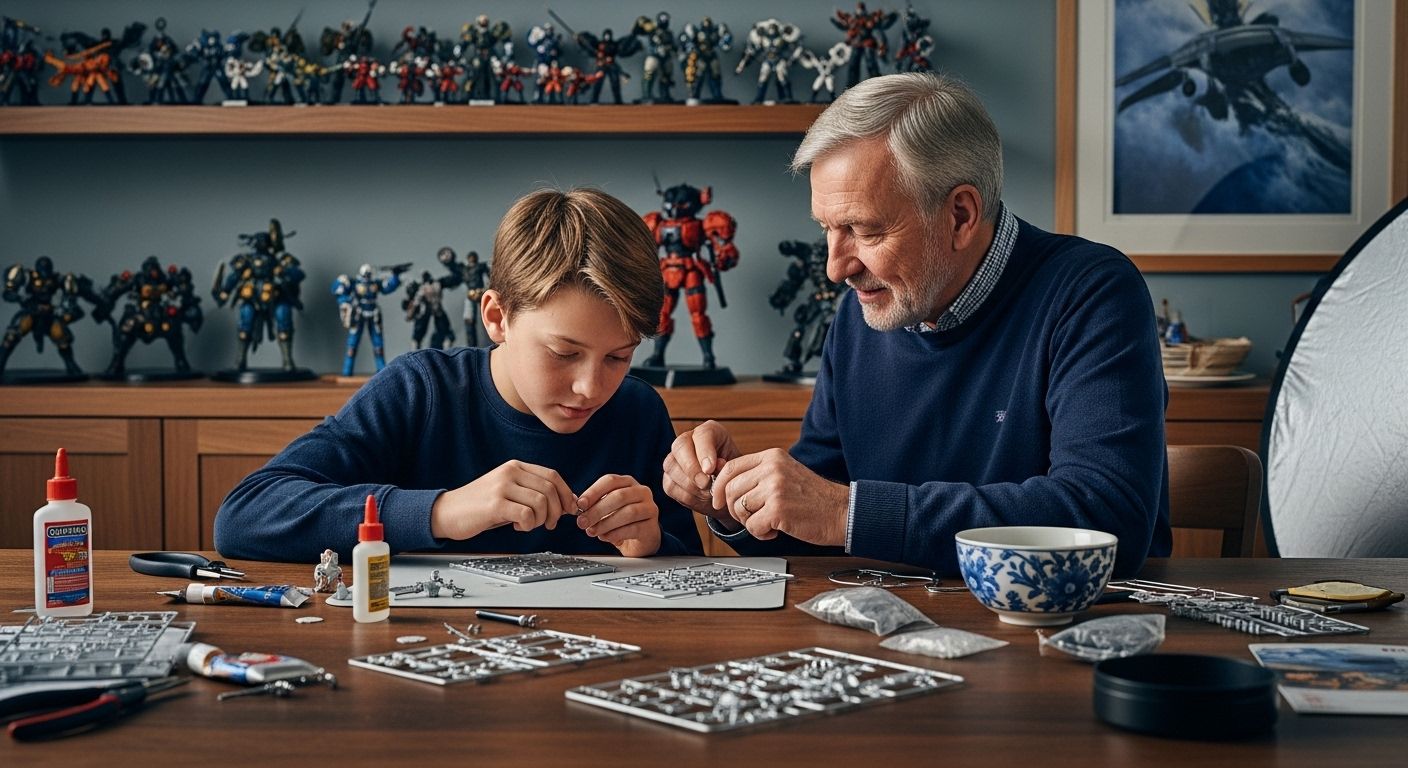
Scale models might seem like a niche interest for nerds, but the truth is that these miniature worlds fascinate millions around the globe. Imagine that archaeologists have found models from ancient Egypt that are over 4000 years old. It would be easy to think that models are only for collectors and children, but on the contrary, it's often engineers and designers who rely on models when future technology and cityscapes are taking shape.
Table of Contents
- What are scale models and their history
- Why are scale models important for collectors and builders?
- How do scale models and their proportions work?
- Different types of scale models and their uses
- What can one learn from building scale models?
Quick Summary
| Takeaway | Explanation |
|---|---|
| Scale models are important for creativity | Building models promotes creative expression and develops technical skills in hobbyists. |
| Historical significance of scale models | Models serve as documentation of cultural and technological development, which is important for our history. |
| Mathematical precision is crucial | Understanding proportions and scaling ensures that models are credible representations of original objects. |
| Model building creates community | Enthusiasts build social bonds by sharing knowledge and techniques within local and online groups. |
| Education through models | Scale models are used to facilitate learning and make complex subjects more understandable for students. |
What are scale models and their history
Scale models are small, accurate representations of real objects created to a proportional and miniature scale. These fascinating models span several categories, from architectural buildings and vehicles to military units and historical artifacts. The concept of creating small-scale models has a rich history that stretches far back in human creativity and technical know-how.
Origin and development
Historically, people have created small models for various purposes. Archaeological finds show that early civilizations such as the Egyptians and Mesopotamians used small models for religious ceremonies and documentation. During the Middle Ages, architectural models were used by builders and designers to visualize complex construction projects.
The industrial revolution marked a crucial point for scale models. Technological advancements enabled more precise and detailed representations. Research from the Science History Institute shows that mechanical engineers and military planners began using scale models as critical tools for design and strategic planning.
Modern applications
Today, scale models are a broad field covering several areas of interest:
- Hobbies for collectors and enthusiasts
- Educational tools in architecture and engineering
- Design prototypes in industrial manufacturing
- Pedagogical aids for visualizing complex systems
Modern scale models are created with astonishing precision, thanks to advanced technologies such as 3D printing and computer-aided design. Our guide on Gunpla models provides a deeper insight into modern model-making techniques.
Why are scale models important for collectors and builders?
Scale models represent more than just small copies of real objects. They are passionate expressions of creativity, historical documentation, and technical craftsmanship that engage people all over the world. For both collectors and builders, these models fulfill a deeper role than mere aesthetic decoration.
Creative expression and personal development
Building scale models is a complex process that requires patience, precision, and artistic skill. Through model making, hobbyists develop critical skills such as:
- Fine motor coordination
- Spatial understanding
- Systematic thinking
- Attention to detail
Our tool guides for model builders can help you develop these skills even further.
Cultural and historical preservation
Scale models serve as living historical records that document technological development and cultural artifacts. According to researchers at the Science History Institute, these models provide a unique opportunity to preserve and understand historical objects in a manageable format.
Military vehicles, historical buildings, and technical constructions can be preserved through carefully constructed scale models. For collectors, it's not just about owning a model, but about honoring and documenting human ingenuity throughout history.
Community and social interaction
Model building creates strong social bonds between enthusiasts. Through local clubs, online forums, and exhibitions, collectors and builders can share knowledge, techniques, and passion. This community continuously promotes learning and encourages creative exchange between people with similar interests.
How do scale models and their proportions work?
Scale models are precise miniature representations based on fundamental mathematical principles and proportional scaling. These models require careful planning and accurate measurement to create credible and correct representations of the original object.
Mathematical foundations of scaling
Proportion in scale models is about creating an exact reduction or enlargement of an object while maintaining its geometric form. This means that all details must retain their relative distances and sizes in relation to each other. Mathematically, this is expressed through the scaling ratio, which describes the relationship between the model's size and the original object's size.
Some common scaling proportions include:
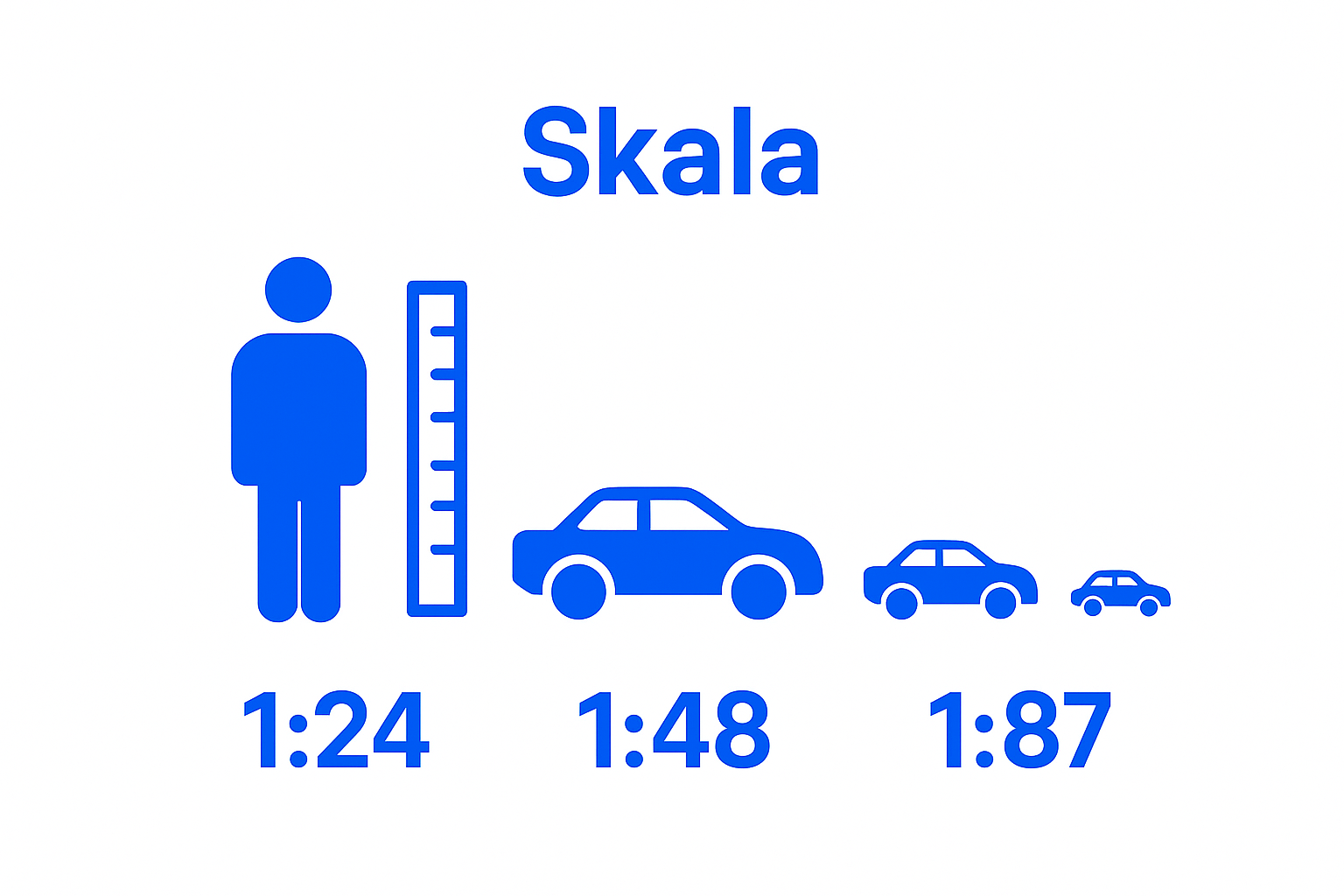
- 1:24 (where 1 cm on the model corresponds to 24 cm in reality)
- 1:48 for airplane models
- 1:87 for railway models
- 1:144 for certain airplane models
Technical manufacturing processes
Model builders use advanced techniques to ensure proportional accuracy. Our guide on modifying kits shows how experts work with precision.
According to NASA's research guidelines, scale models are critical for understanding and visualizing complex objects. Modern technologies such as 3D scanning and computer-aided design enable extremely accurate proportions.
Practical applications
Scale models' precision makes them invaluable in several areas:
- Architectural planning and visualization
- Military and strategic planning
- Industrial product development
- Education and pedagogical demonstrations
Every detail in a scale model represents a well-thought-out mathematical and artistic process where proportions, scale, and precision converge to create a miniature world that faithfully reflects the original object.
Different types of scale models and their uses
Scale models come in a wide spectrum of categories, each designed for specific purposes and interests. From hobby collectors to professional researchers, these models are used to represent, study, and understand complex systems and objects in miniature format.
Hobby and collector-oriented models
This category includes models created for personal enjoyment and passion. Enthusiasts engage in building and collecting models of:
- Military vehicles and fighter jets
- Cars and motorcycles
- Ships and boats
- Science fiction and popular cultural figures
Our guide on Gunpla models provides a deeper insight into this fascinating world of model making.
Professional and scientific models
In professional contexts, scale models fulfill critical functions in several areas. Research from the Architecture Institute shows how these models are used for:
- Architectural design and urban planning
- Engineering projects and product development
- Geological and marine research studies
- Military strategic planning exercises
Scientific models require extreme precision and often represent complex systems or natural phenomena in a manageable format.
Educational and pedagogical models
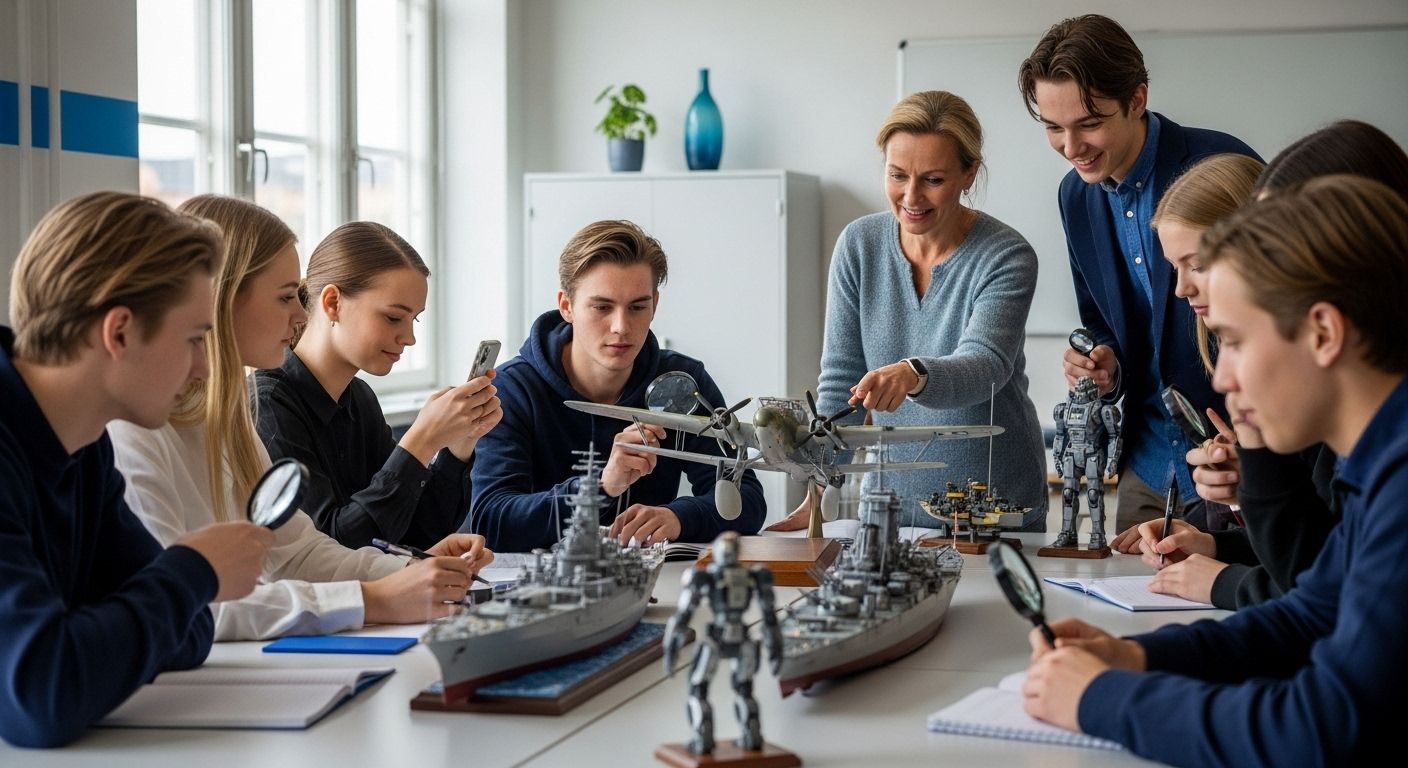
Scale models play a crucial role in education by making abstract concepts tangible and understandable. Teachers and educators use models to:
- Visualize historical constructions
- Demonstrate biological systems
- Explain astronomical and geological processes
- Illustrate technical mechanisms
By creating small, accurate representations, complex ideas can be made more accessible and comprehensible for students of all ages.
To provide a clear overview of the different main types of scale models and their uses, a category overview of the models mentioned in the article is compiled below.
| Category | Example | Primary use |
|---|---|---|
| Hobby and collector-oriented | Military vehicles, cars, ships, science fiction figures | Personal enjoyment, collecting, creative expression |
| Professional and scientific | Architectural buildings, engineering and geological models | Design, planning, research |
| Educational and pedagogical | Historical constructions, biological systems, astronomical models | Teaching, concept visualization, demonstration |
What can one learn from building scale models?
Building scale models is much more than a hobby. It is a comprehensive learning experience that develops a wealth of cognitive, practical, and social skills invaluable in personal and professional development.
Technical and cognitive skills
Through model making, builders develop advanced technical competencies. The process requires:
- Accurate spatial understanding
- Precision and attention to detail
- Basic engineering techniques
- Problem-solving ability
Our tool guides for model builders can help you deepen these skills and better understand the technical aspects.
Psychological and personal development aspects
Model making offers more than technical lessons. According to the Swedish National Agency for Education's pedagogical research, the activity promotes:
- Patience and perseverance
- Stress tolerance
- Creative thinking
- Ability to follow instructions
- Self-confidence through completing complex projects
Social competence and knowledge sharing
Model building is not an isolated activity. It creates opportunities for:
- Community with like-minded enthusiasts
- Knowledge exchange and mentorship
- International cultural understanding
- Networking within hobbies and professional circles
Each model represents a journey of continuous learning, where every detail and moment contributes to personal development and skill improvement.
Take your scale models to the next level with Robotto.se
Have you just gained a deeper understanding of what scale models mean and now want to start building, collecting, or improving your own models? Many who read our article on scale models face challenges such as finding the right kits, tools, and inspiration to truly develop their interest. Perhaps you're looking for quality Gundam kits, detailed figures, or accessories that match your specific passion. At Robotto.se, you'll find the full range of models, figures, and collectibles for those who want to take their building to new heights. You'll also find guides on tools for model builders and inspiration on Gunpla models for beginners and collectors directly on our website.
Explore our assortment today at Robotto.se and discover how easy and fun it is to transform your knowledge of scale models into concrete projects and fantastic building results. Start your journey to the next masterpiece now and secure the latest kits before they run out.
Frequently Asked Questions
What are scale models?
Scale models are small, accurate representations of real objects created to a proportional and miniature scale. They are used for various purposes, including hobbies, education, and professional applications.
How does scaling work in scale models?
Scaling involves creating an exact reduction or enlargement of an object, where all details retain their relative distances and sizes. Common scaling proportions include 1:24, 1:48, and 1:144.
What types of scale models are there?
There are several types of scale models, including hobby and collector-oriented models, professional and scientific models, and educational models, each with its specific uses.
What are the benefits of building scale models?
Building scale models promotes the development of technical and cognitive skills, patience, problem-solving abilities, and social interactions within communities of like-minded enthusiasts.