

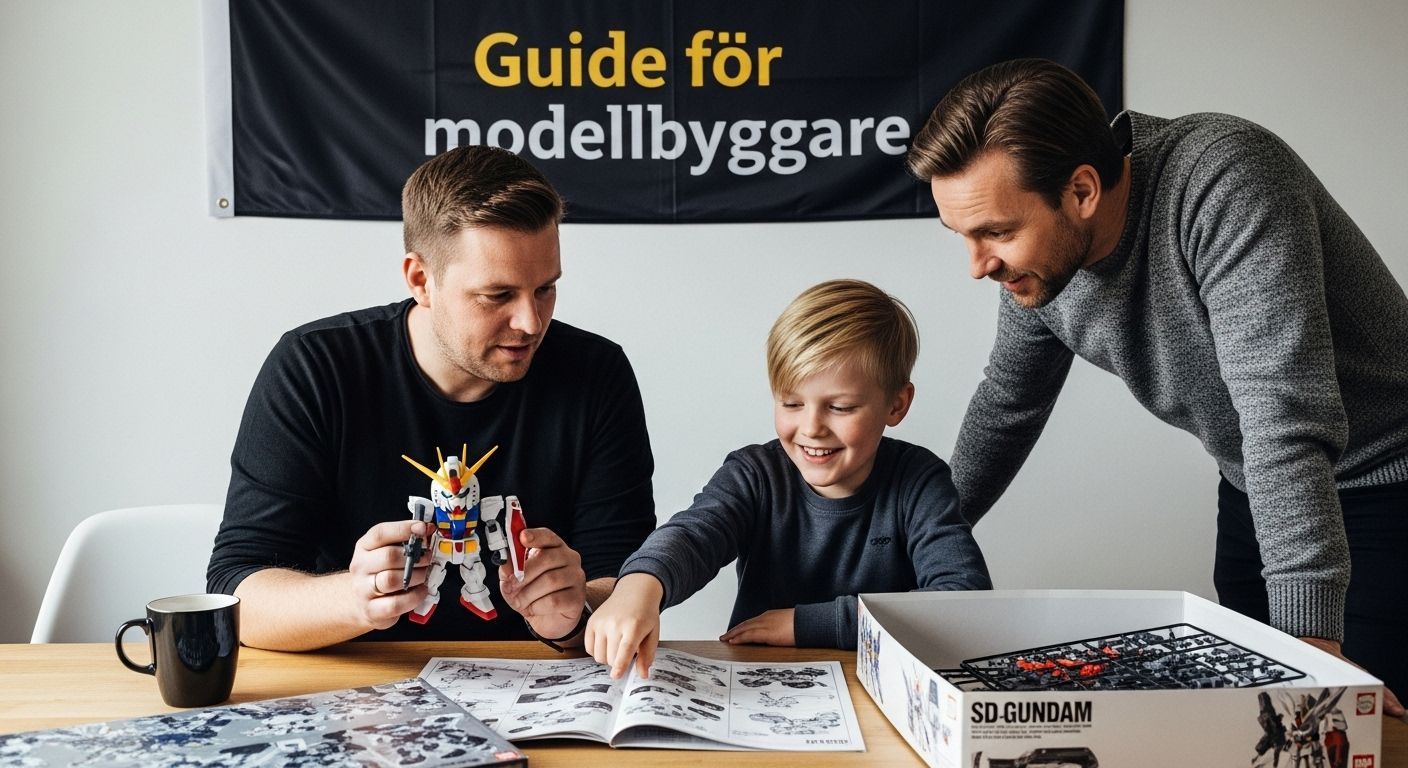
SD Gundam has captivated both children and adults for decades, being a cultural phenomenon where gigantic combat robots become small, overly cute figures. Many believe these models are just simple toys. However, the fact is that some SD Gundam kits from the 80s can sell for many times their original price when in unopened condition, and their collector's value has exploded among enthusiasts. The real surprise is how these small models have become true rarities and creative masterpieces in the model world.
Table of Contents
- SD Gundam – History and Origins
- Differences Between SD Gundam and Regular Gundam Models
- Popular SD Gundam Products and Collector's Value
- Tips for Starting to Build Your Own SD Gundam Models
Quick Summary
| Takeaway | Explanation |
|---|---|
| SD Gundam is a unique subgenre | This style of super-deformed robots originated in the 1980s and has become popular among both children and adults. |
| Differences in design and building techniques | SD Gundam models have exaggerated proportions and a simpler building process compared to traditional Gundam models. |
| Valuable collector's items exist | Classics like the BB Senshi series can be highly sought after, especially in unopened condition. |
| Start with beginner-friendly models | Choose simpler snap-fit kits for a fun and stress-free introduction to model building. |
| Customization increases enjoyment | Experiment with different poses and colors to make each model personal and unique. |
SD Gundam – History and Origins
SD Gundam represents a unique and beloved part of the Gundam universe that has fascinated collectors and model builders since its origin in the 1980s. This particular subgenre, whose name stands for "Super Deformed," introduced a revolutionary aesthetic where gigantic robots transformed into small, over-decorated, and extremely charming versions of their original designs.
Cultural and Artistic Origins
The idea behind SD Gundam emerged as a fun and creative interpretation of the classic mecha designs. Artists and designers wanted to create something that was both recognizable and totally different from traditional Gundam models. By heavily exaggerating the proportions — large heads, small bodies, and overly expressive facial features — a completely new visual style was created that quickly captured the audience's interest.
This style was not only an aesthetic experiment but also a way to make complex robot designs more accessible and playful. Children and adults could now relate to these robot characters in a more emotional and humorous way. The concept was so successful that it quickly spread from model building to manga, anime, and video games.
Expansion and Popularization
During the 1990s, the SD Gundam phenomenon exploded. Bandai, already an established name in the Gundam universe, recognized the potential and began producing dedicated model kits, anime series, and merchandise. Explore the Gundam universe and you will understand how these small, charming versions of gigantic combat robots truly changed the rules of the game.
The SD Gundam series also introduced unique stories and characters that differed from the main series. Instead of serious military conflicts, these versions often offered more humorous and playful narratives, which further contributed to their charm and broad appeal.
Today, SD Gundam is more than just a subgenre – it is a cultural institution. Collectors and model builders worldwide seek out these unique figures, and each new release is celebrated with great enthusiasm. From classic designs to modern interpretations, SD Gundam continues to reinvent itself and attract new generations of fans.
Whether you are an experienced model builder or a beginner fascinated by small, super-deformed robots, SD Gundam offers a unique entry into the Gundam universe – filled with creativity, humor, and unlimited imagination.
Differences Between SD Gundam and Regular Gundam Models
The Gundam universe is known for its diversity, and two of the most fascinating model types are SD Gundam and traditional Gundam models. These two categories differ significantly in terms of design, building process, and overall aesthetics, making them unique within the model building world.
Design Philosophy and Proportions
The most obvious difference between SD Gundam and regular Gundam models lies in their design philosophy. SD Gundam is characterized by its extremely exaggerated proportions – enormous heads, small bodies, and heavily simplified forms that give an almost comical and cute appearance. Traditional Gundam models, on the other hand, strive for realism and anatomical precision. They reflect the original mecha designs with detailed mechanical features, proportional forms, and a more serious aesthetic expression.
For model builders, this entails different challenges and enjoyment. SD Gundam models focus more on charm and playfulness, while traditional models require precision and technical skill. Explore the secrets of model building to understand the depth of these fascinating constructions.
Building Technique and Complexity
When it comes to the actual building process, there are significant differences between SD Gundam and regular Gundam models. SD Gundam kits are generally easier to build, with fewer parts and more straightforward assembly processes. This makes them perfect for beginners or those who prefer a more relaxed building experience. They are often snap-fit models that do not require glue or complex tools.
Regular Gundam models, especially the higher grades like Master Grade or Perfect Grade, represent a completely different level of complexity. These models can have hundreds of details, require careful gluing, painting, and often advanced building techniques. They offer a more technically demanding experience for experienced model builders seeking challenge and precision.
Another important difference lies in their mobility and posing possibilities. SD Gundam figures have limited articulation due to their compact proportions, while traditional Gundam models often have sophisticated joints that allow for numerous and dynamic poses.
Regardless of the type of model you prefer, both SD Gundam and traditional Gundam models offer unique ways to experience and appreciate the Gundam universe. They represent different aspects of the same passion – the love for mechanical design, creativity, and stories of heroic robots fighting for something greater than themselves.
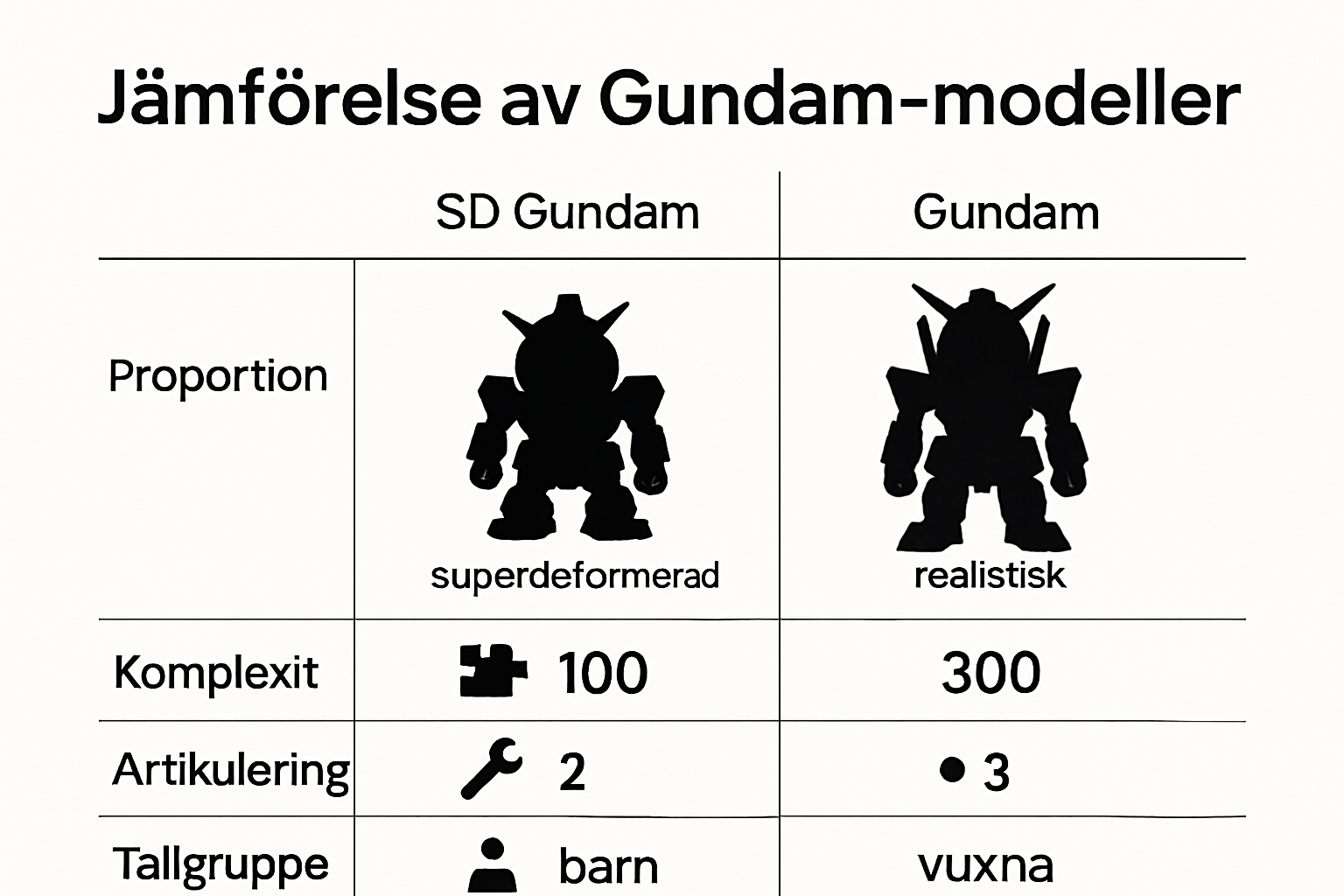
To clearly illustrate the differences between SD Gundam and traditional Gundam models, here is a comparison table of the main aspects discussed in this section:
| Aspect | SD Gundam | Traditional Gundam Models |
|---|---|---|
| Design | Exaggerated, cute proportions | Realistic and anatomical proportions |
| Building Complexity | Low, few parts, simple snap-fit kits | High, many parts, advanced techniques |
| Requires glue/tools | Rarely | Often |
| Articulation | Limited | High, many posing possibilities |
| Target Audience | Beginners & collectors | Experienced builders & enthusiasts |
| Focus | Playfulness, charm | Realism, detail |
Whether you are an experienced collector or a beginner who has just discovered this fascinating hobby, there is a Gundam model that suits you. From the charming SD versions to the impressively realistic combat machines, Gundam continues to inspire and enchant model builders worldwide.
Popular SD Gundam Products and Collector's Value
The world of SD Gundam is filled with fantastic products that have fascinated collectors and model builders for decades. From classic series to modern interpretations, these small, charming figures have created a huge market with a wide spectrum of collectible and valuable products.
Classic and Sought-After Series
Some of the most popular SD Gundam series include BB Senshi, an iconic line that introduced the concept of super-deformed robots. These models are characterized by their extremely compact proportions and playful design, making them highly sought-after collector's items. Some limited editions and older kits can reach remarkable prices in the collector's market, especially if they are in unopened condition or are special editions.
For serious collectors, some series are valued higher than others. For example, early BB Senshi models from the 1980s and 1990s have become true treasures. Explore the secrets of model collecting to understand which factors affect a model's collector's value.
Modern Products and Collector Trends
Modern SD Gundam products have evolved beyond traditional model kits. Today, there is a wide range of collectible items that include anime figures, keychains, pins, digital NFT collections, and even interactive game figures. Some limited editions from popular series like Gundam Build Divers or SD Gundam World Heroes can quickly increase in value.
Collector's value is influenced by several factors. Originality, condition, limited availability, and historical significance play a major role. An unopened model from an early series can be worth many times more than a regular release. Collectors look for unique details, special editions, and models that represent important moments in the Gundam universe.
Interest in SD Gundam continues to grow globally. Young collectors are introduced to the hobby through these charming figures, while experienced enthusiasts continue to expand their collections with rare and significant models. Every new release creates a wave of excitement in the collector community, with collectors quickly trying to secure the most coveted items.
Whether you are an experienced collector or a beginner who has just discovered this fascinating world, SD Gundam offers a unique opportunity not only to build models but also to invest in a piece of pop culture history. From the early BB Senshi series to the latest digital interpretations, SD Gundam continues to captivate and inspire collectors worldwide.
Tips for Starting to Build Your Own SD Gundam Models
Starting to build SD Gundam models is a fantastic journey into a creative and fun hobby suitable for both beginners and experienced model builders. This guide will help you navigate the first steps and provide valuable insights to create your first super-deformed masterpieces.
Choosing Your First Model
When choosing your first SD Gundam model, it's important to consider your experience level. For absolute beginners, simple snap-fit kits that don't require glue or advanced tools are recommended. Look for models marked as 'beginner friendly' or from the BB Senshi series. These models have fewer parts and simpler assembly processes, making them perfect for those just starting their model building journey.
Prepare by acquiring basic tools. A pair of pliers designed for model building, plastic tweezers, and a small side cutter are essential. Explore the basics of model building to understand what tools are required for a successful building experience. Avoid using regular household scissors, which can damage plastic parts.
To facilitate the choice for beginners, recommended tools for building SD Gundam models are organized in the table below:
| Tool | Recommended for? | Note |
|---|---|---|
| Model building pliers | Everyone | Cut parts from the plastic frame |
| Plastic tweezers | Everyone | Handle small parts |
| Side cutter | Everyone | Carefully remove larger parts |
| Household scissors | Not recommended | Can damage parts, should be avoided |
| Glue | Advanced builders only | Usually not necessary for snap-fit models |
| Paint/Marker | For customization | Optional, for a personal touch |
Assembly Tips and Techniques
When you start assembling your SD Gundam model, it's important to follow the instructions carefully. Each part is numbered and has specific connection points. Take your time to understand each step and be careful when pressing the parts out of the plastic frame. Use sharp plastic pliers and cut close to, but not directly on, the edge of the part to avoid damage.
A professional tip is to wipe the parts with a soft cloth before assembly to remove any plastic dust. This ensures cleaner and neater joints. Also, pay attention to the orientation of the parts – a misplaced part can ruin the entire model's appearance. Some collectors prefer not to paint their models initially, while others love to add personal details and colors.
Customization is a big part of the joy of SD Gundam. Experiment with different poses, mix parts from different kits, or add small decorative elements to make your model unique. Be creative but respect the model's basic structure.
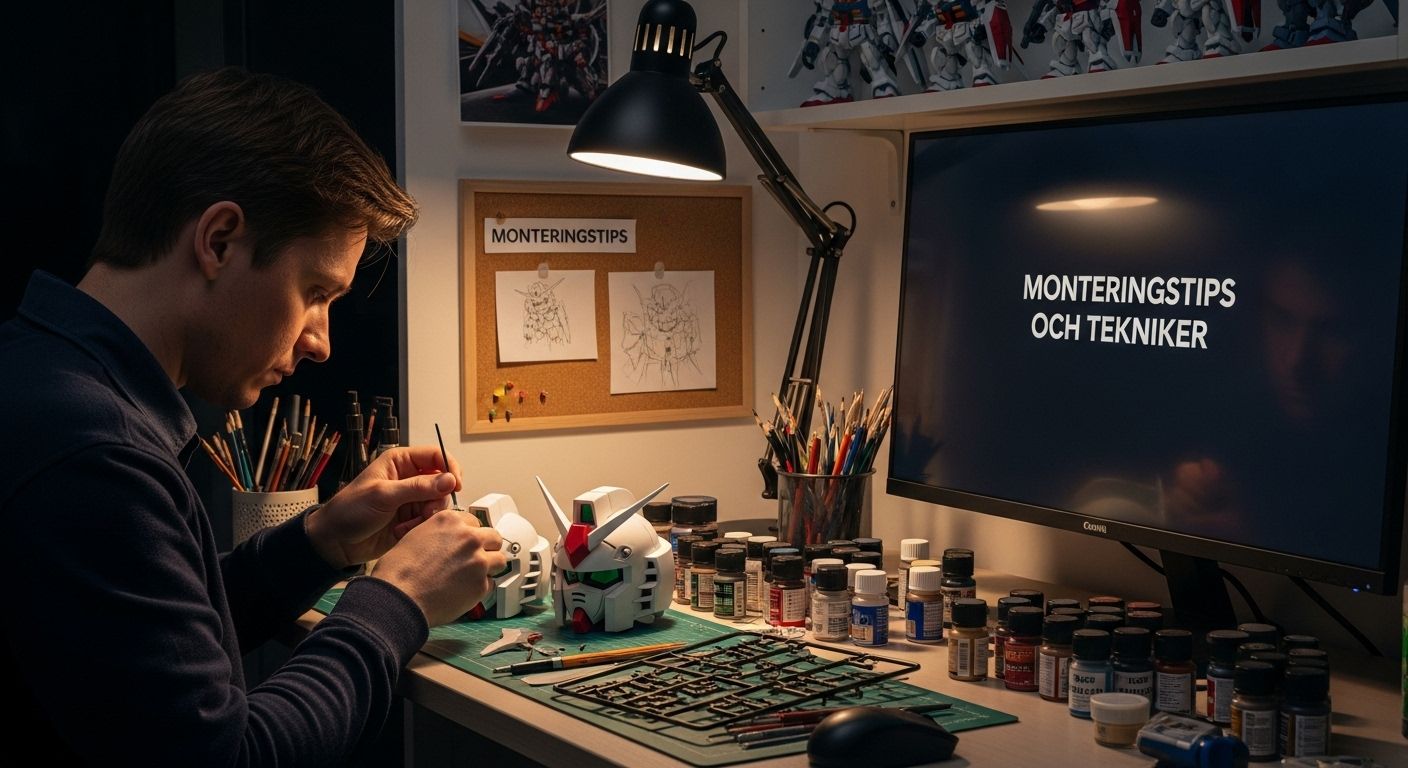
To help new builders follow the assembly process, the table below summarizes important building steps for SD Gundam models:
| Step | Description |
|---|---|
| Prepare tools and workspace | Gather models, pliers, side cutter, tweezers, and soft cloth |
| Cut parts from the frame | Use the right tools, cut close to but not on the part |
| Wipe parts | Remove plastic dust for cleaner joints |
| Follow assembly instructions carefully | Keep track of part numbers and orientation |
| Assemble without glue (snap-fit) | Most SD Gundam kits do not require glue |
| Check the result | Ensure all parts are correctly in place, correct if necessary |
| Customization and decoration (optional) | Add color, details, or experiment with poses |
For those who want to take their models to the next level, there are advanced techniques such as light gluing, color modulation, and detailed painting. But remember – every model builder started somewhere. Be patient with yourself and enjoy the process. Every model you build will improve your skills and increase your understanding of this fascinating hobby.
SD Gundam model building is not just about creating a figure. It is a form of art, storytelling, and personal expression. Whether you build to collect, to decorate, or just for the pleasure of creating something with your own hands, there is an SD Gundam model that suits you. Dare to experiment, be creative, and most importantly – have fun on your model building journey.
Frequently Asked Questions
What is SD Gundam?
SD Gundam is a subgenre within the Gundam universe that focuses on 'super-deformed' robots, meaning the models have exaggerated proportions, making them both cute and playful.
How does SD Gundam differ from regular Gundam models?
SD Gundam models have a simpler design with large heads and small bodies, while regular Gundam models strive for detailed realism and anatomical precision. The building process is also simpler for SD Gundam.
What are the most sought-after SD Gundam products?
The most sought-after products include classic models like the BB Senshi series, especially those in unopened condition or special editions from the 80s and 90s.
How can I start building SD Gundam models as a beginner?
Start by choosing simple snap-fit kits that require minimal equipment. Basic tools such as hobby nippers and plastic tweezers are recommended to make the process smoother.
Build your dream collection with SD Gundam at Robotto.se
Have you felt the frustration when the coveted SD Gundam model never appears in Swedish stores or when its collector's value rises while you wait? You're not alone. Many model builders and collectors face the challenge of finding the right kit, tools, and accessories – especially when models in the BB Senshi series quickly disappear from the market.
Explore our world of models, figures, and collectibles. At Robotto.se, you'll find not only SD Gundam kits but also accessories, news, and guides that make every building project easier and more fun. Discover our range of model kits and get inspired by products carefully selected for both collectors and beginners. Don't wait until the next popular model is sold out – visit Robotto.se and take your next step in the hobby today.