

Model kits attract both beginners and experts with their myriad building possibilities and clever solutions. Many believe these kits are just simple plastic pieces on a sprue. However, the fact is that some model kits contain over 300 individual parts and require hours of meticulous work to complete. Behind each such box lies a whole world of engineering, precision, and creativity where every choice actually shapes your own work of art.
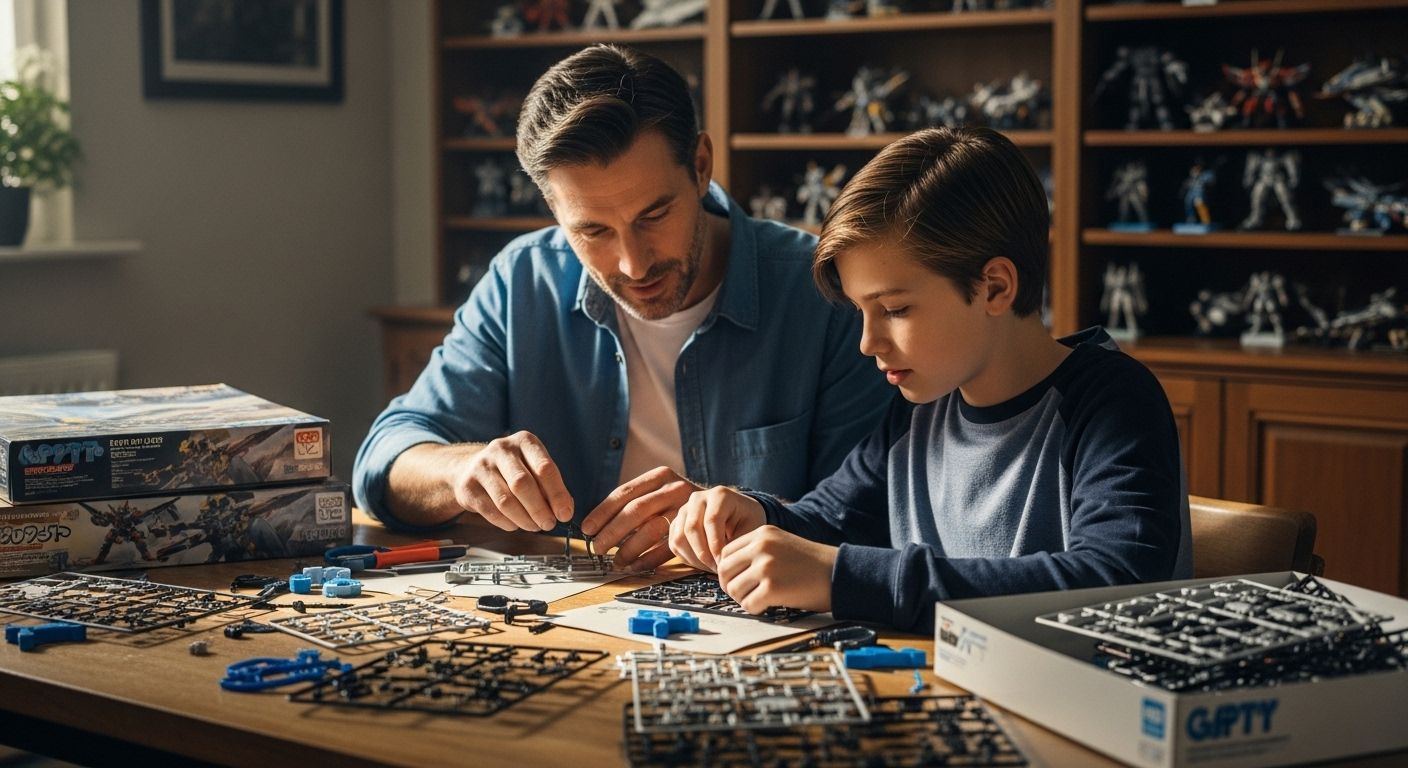
Table of Contents
- What are model kits and how are they classified?
- Why is it important to understand the differences between model kits?
- How do different types of materials and constructions work in model kits?
- What factors influence the choice of model kit for collectors and hobbyists?
- Practical applications of model kits in cosplay and the gaming world
Quick Overview
| Summary | Explanation |
|---|---|
| Understand difficulty levels | Choose a kit that matches your skill level to avoid frustration. |
| Classify models by theme | The theme influences your choice – military, sci-fi, or pop culture. Choose based on interest. |
| Learn material properties | Different materials provide different building characteristics. Polystyrene, resin, and metal are the most common. |
| Adapt technique to kit | Use the right techniques for assembly and finish for best results. Check the material type before you start. |
| Set a budget for purchase | Prices vary widely. Know the differences to make wise choices and avoid unnecessary costs. |
What are model kits and how are they classified?
Model kits are more than just construction sets – they represent a fascinating world of hobby, creativity, and precision. The guide for robot manufacturers reveals the complexity these miniatures hold.
Basic definition of model kits
A model kit is a construction set that comes in parts and requires the hobbyist to assemble, mount, and often paint the model themselves. According to HandWiki, these kits range from simple snap-together constructions to advanced models requiring specialized tools and great skill.
When you buy a model kit, you typically receive a set of components such as:
- Plastic parts in various colors and sizes
- Detailed assembly instructions
- Optionally a color guide or decals
Classification of model kits
Model kits can be classified by several important parameters:
- Difficulty level: From beginner to expert level
- Scale: For example, 1:144, 1:72, 1:48, which indicates the size of the model figure in relation to the original
- Theme: Military vehicles, robots, airplanes, ships, figures from popular culture
Each model kit is unique and offers a personal challenge where the hobbyist can express their creativity and precision. It's not just about building a model, but about creating a work of art with your own hands.
Why is it important to understand the differences between model kits?
Understanding the differences between model kits is crucial for every hobby enthusiast. Our detailed model figure illustrates just how complex and fascinating this hobby can be.
Individual development and skill level
Understanding different model kits enables personal growth within the hobby. According to research findings, model making is more than just a pastime – it is a learning process that develops critical cognitive abilities.
When you understand the differences, you can:
- Choose kits that suit your current skill level
- Gradually challenge yourself with more advanced constructions
- Develop specialized technical skills
Economic and practical considerations
Knowledge of model kits helps you make more informed purchasing decisions. Different kits vary dramatically in:
- Price
- Complexity
- Material quality
- Time required for completion
Knowing these differences prevents unnecessary expenses and frustration. A beginner who buys an expert-level kit risks being overwhelmed, while an experienced model maker may find a too-simple kit limiting.
Ultimately, understanding model kits is about enjoying the process, developing personal skills, and creating something unique with your own hands. Every model kit tells a story – and the more you understand, the richer that story becomes.
How do different types of materials and constructions work in model kits?
Model kits are a fascinating world of materials and techniques that require precision and knowledge. Our official Attack on Titan cape represents just one part of the complexity found in model making.
Material properties and manufacturing processes
According to HandWiki, model kits are dominated by injection-molded polystyrene, which offers specific properties and building possibilities. The manufacturing process determines the final quality and buildability of the material.
Main materials include:
- Polystyrene plastic (most common)
- Resin materials (for detailed models)
- Metal components
- Vacuum-formed parts
Techniques for assembly and finish
Each model kit requires specific assembly techniques depending on the material composition. Professional model makers use various techniques such as:
- Precision cutting of details
- Bonding with special adhesives
- Sanding for smooth surfaces
- Painting with acrylic-based paints
Understanding these materials and techniques is about mastering the complex balance between creativity and technical skill. A successful model builder must understand the properties of the materials, their limitations, and potential opportunities.
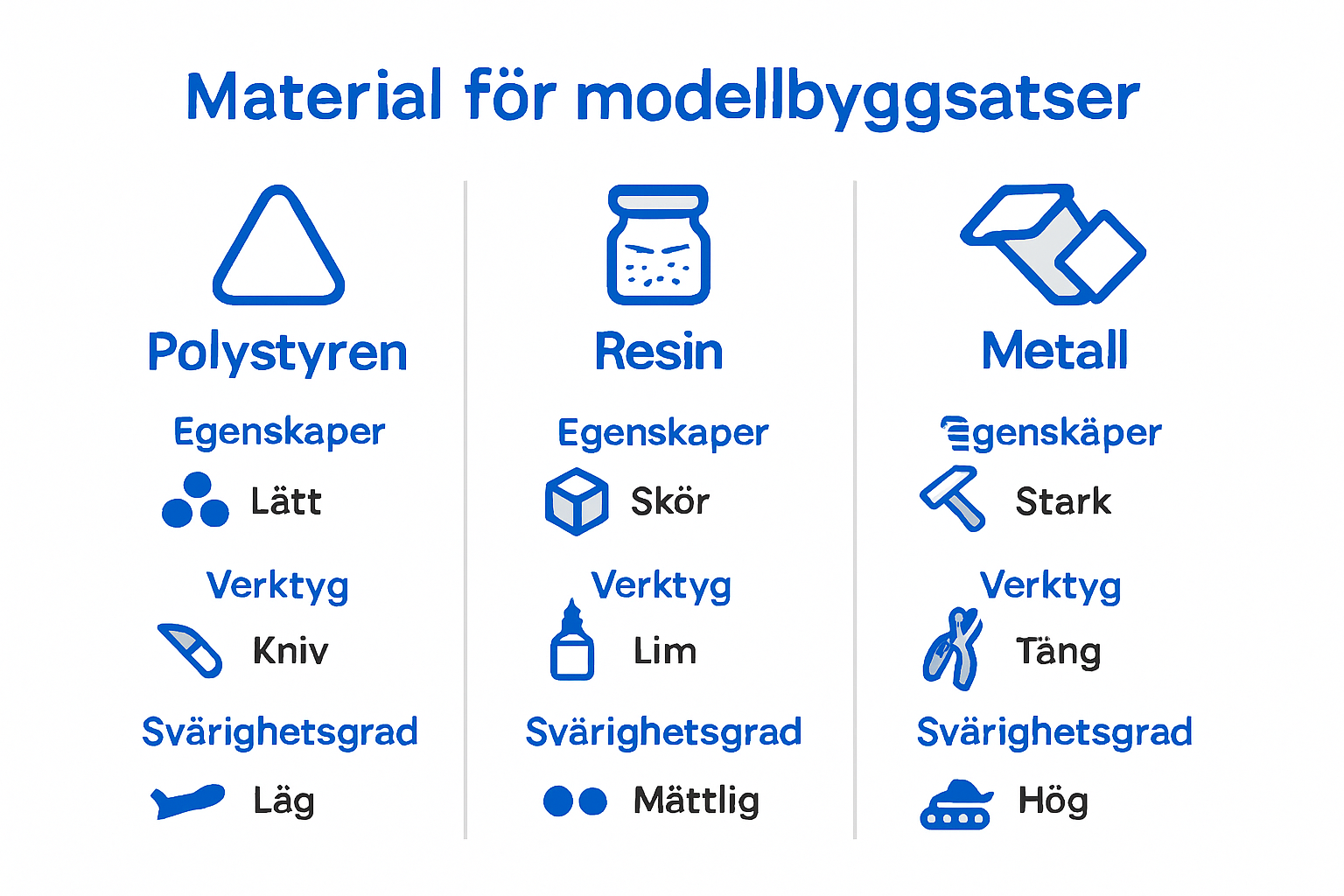
Below you will find a comparison of the most common materials in model kits and their key properties, which can help you choose materials based on your needs:
| Material | Properties | Typical uses |
|---|---|---|
| Polystyrene plastic | Easy to work with, inexpensive, durable | Standard details, most kits |
| Resin | Highly detailed, brittle, more expensive | Special models, high precision |
| Metal components | Strong, durable, more advanced processing | Complex details, custom builds |
| Vacuum-formed plastic | Lightweight, thin, can be difficult to work with | Specific parts, unique surfaces |
Model kits are more than just construction sets – they are stories created through careful handling of materials, precision, and passion.
What factors influence the choice of model kit for collectors and hobbyists?
The choice of model kit is a personal journey influenced by several decisive factors. Tips for creating an impressive Gundam display show how passion and personal style play a role in collecting.
Personal skill and challenge
According to Technavio, the model kit market is driven by a growing DIY trend where hobbyists seek creative expression. The choice of model kit largely depends on the individual's skill level:
- Beginners prefer simpler kits with fewer components
- Experienced model makers seek complex constructions
- Experts challenge themselves with ultra-fine details and special models
Thematic and aesthetic considerations
Collectors and hobbyists often choose model kits based on personal interest and aesthetically pleasing themes:
- Historical vehicles and military models
- Pop culture figures from film and games
- Sci-fi and space-related constructions
- Everyday objects and architectural models
Every model kit tells a story, and the choice is about finding the story that resonates most with you personally. It's not just a building set – it's an expression of your creativity and passion.
Practical applications of model kits in cosplay and the gaming world
Model kits extend far beyond the hobby desk and into the creative worlds of cosplay and gaming. Create your own board game layout shows how model kits can transform gaming experiences.
Cosplay and character recreation
According to Transformative Works and Cultures, cosplay is more than just a costume – it is a craft that requires careful research and technical skill. Model kits play a crucial role in this creative process:
- Creating accurate replicas of character weapons and accessories
- Allowing for detailed customization
- Enabling the creation of complex, three-dimensional costume elements
Visual storytelling in the gaming world
In the gaming world, model kits serve as vital tools for visual worldbuilding and design:
- Development of game scenarios and terrains
- Creation of detailed game boards
- Design prototypes for game characters and environments
- Visual reference for game developers
Each model kit is a story in miniature – a creative tool that bridges fantasy and reality, bringing to life the worlds we love to explore.
Make the right choice among model kits and develop your hobby at Robotto.se
Have you felt unsure when choosing the right model kit for your level or collecting interest? The article "Difference between model kits – An in-depth explanation" highlights precisely the challenge of understanding difficulty, material, and thematic variations when building models. Whether you are looking for advanced kits, Gundam, or want to find something that matches your own journey as a hobbyist, it is important not to get stuck with the wrong kit. At Robotto.se, you will find a wide range that helps both beginners and collectors feel confident and inspired. Here you can get guidance from our guides or browse special products for cosplay and gaming worlds.
Now is the right time to deepen your hobby and create models that truly challenge and develop you. Explore our assortment to find your next challenge or collectible today at Robotto.se and give your creativity space. Go ahead and discover the possibilities just waiting to be built – your perfect model kit is already here.
Frequently Asked Questions
What is a model kit?
A model kit is a construction set of various parts that hobbyists assemble and often paint themselves. They come with instructions and can vary in difficulty and theme.
How are model kits classified?
Model kits are classified based on difficulty, scale, and theme, such as military vehicles, robots, or figures from popular culture.
What materials are used in model kits?
Most model kits are made of injection-molded polystyrene, but can also contain resin, metal, and vacuum-formed parts depending on the model's level of detail.
How does difficulty affect the choice of model kit?
The difficulty is determined by the number of parts and the complexity of the assembly. Beginners should choose simpler kits, while experienced builders can challenge themselves with more advanced constructions.