

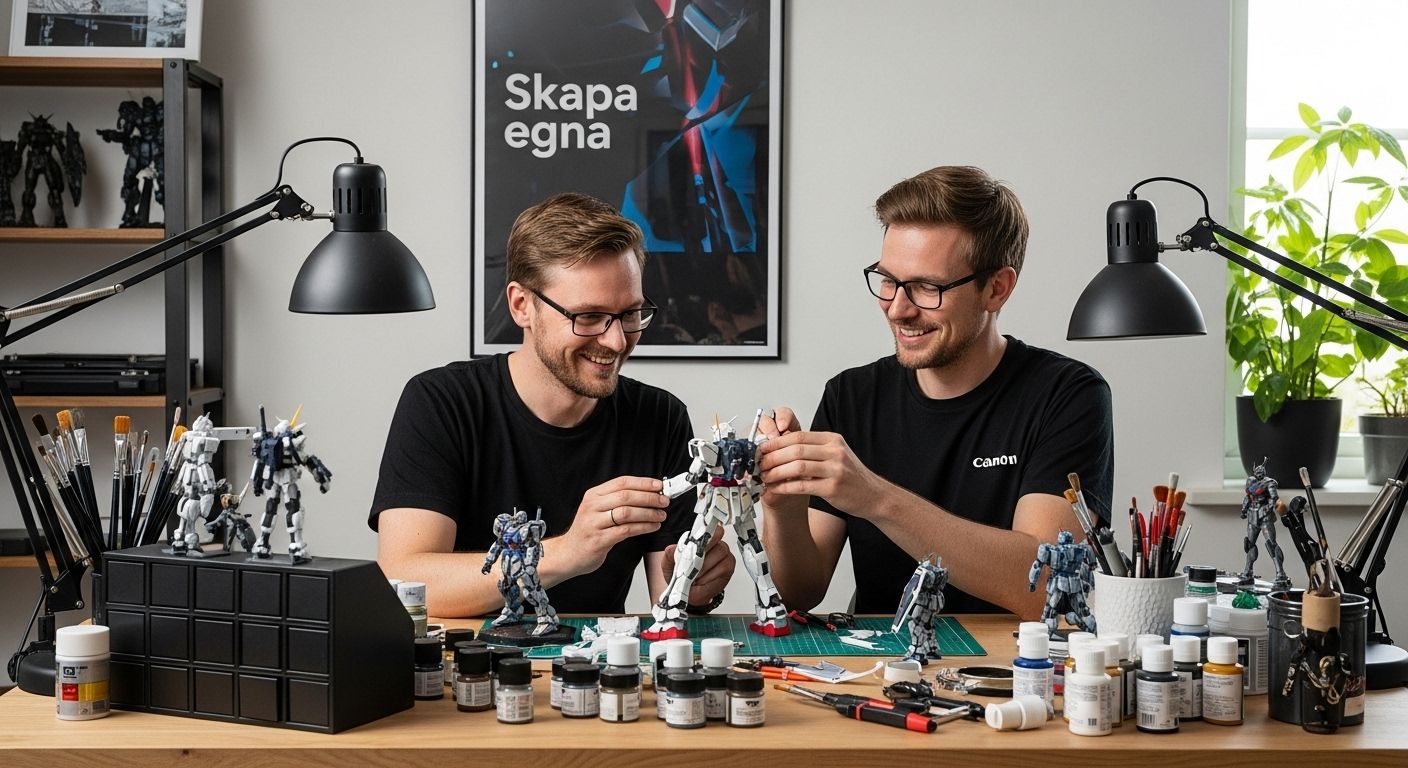
Building your own Gundam diorama is a dream for many hobby model builders who want to take their figures to the next level. You often hear that it requires advanced techniques and lots of expensive tools, but that's not true at all. In fact, with simple materials like foam plastic and MDF boards, you can create stable and detailed dioramas – and just the right color scheme can give the illusion of both depth and drama without extra cost.
Table of Contents
- Choose the right materials for your Gundam diorama
- Build and paint your Gundam environment step by step
- Decorate and customize your diorama with creative details
- Tips for displaying and caring for your Gundam diorama
Quick Summary
| Action | Explanation |
|---|---|
| Choose the right materials carefully | Materials like foam plastic and MDF boards create stable and detailed dioramas. |
| Create an organized workspace | A clean and well-lit workspace facilitates the building and painting of the diorama. |
| Add small details for realism | Small elements like rusty parts or plant fragments add life and narrative to your diorama. |
| Use acrylic paints effectively | Different colors create depth and shadows that make the diorama more visually appealing. |
| Protect and maintain the diorama | Proper maintenance and storage preserve the details and longevity of your diorama. |
Choose the right materials for your Gundam diorama
When creating your own Gundam diorama, material selection is crucial for the final result. The right materials can transform your diorama from a simple model into a living story that captures the viewer's imagination. Every material you choose plays a critical role in creating depth, texture, and authenticity in your scene.
Basic materials for a stable foundation
To build a solid foundation for your Gundam diorama, you need materials that are easy to work with yet stable. Foam plastic is an excellent option that allows you to sculpt terrain easily. You can cut, shape, and sand the material to create uneven landscapes, rock formations, or urban environments. Cork sheets also work excellently – they have a natural texture that is perfect for simulating ground and rocky terrain.
Using MDF boards as a base gives you an extra stable foundation. These boards are dense and even, making them ideal for more complex diorama designs. By combining different materials, you can create depth and variation in your scene. For example, you can use foam plastic for the larger landscape forms and then cover them with modeling clay or spackle to create more detailed textures.
Textures and details that bring the scene to life
Details are key to making your Gundam diorama truly memorable. Natural materials like sand, gravel, and small stones can transform your base from a flat surface into a living environment. Use different grain sizes to create realistic ground conditions. Fine sand can represent desert landscapes, while coarser gravel suits mountainous or industrial scenarios.
Static grass and small dried plant parts immediately add life to your diorama. These materials help you create believable green surfaces or desolate landscapes, depending on the type of environment you want to recreate. Remember to vary colors and heights to achieve a natural feel. Explore our modeling tips for more details on how to improve your diorama scenes.
Colors and final details
Once you have built your basic structure, color choice is crucial. Acrylic paints are perfect for Gundam dioramas because they dry quickly and provide an even, matte or glossy finish. Use different shades to create depth and shadows. Dark brown and gray tones work excellently for creating realistic ground conditions, while green shades can represent vegetation.
Details such as small stones, metal parts, or artificial plant parts can be added to increase authenticity. Be careful with the amount of detail – too much can make the scene cluttered, while too little can make it boring. Balance is key when creating your own Gundam diorama.
With the right materials, careful planning, and creativity, you can create a fantastic Gundam diorama that tells a story and captivates the viewer. Experiment, be brave, and most importantly – have fun in the process!
Build and paint your Gundam environment step by step
Building and painting your Gundam environment is a creative process that requires patience, precision, and passion. Each step is an opportunity to transform an ordinary model into a living story that captures the sense of movement and excitement in the Gundam universe.
Here is an overview table comparing different base materials for foundation and decoration, which will help you choose the right one for your diorama project:
| Material | Area of use | Advantages | Disadvantages |
|---|---|---|---|
| Foam plastic | Terrain, rocks, landscape | Easy to work with, moldable | Sensitive to glue, softens under pressure |
| MDF board | Base, foundation | Very stable, smooth surface | Heavy, can be moisture sensitive |
| Cork sheet | Ground, stone, textures | Natural structure, easy to glue | Can crumble, less robust |
| Modeling clay | Details, surface sculpting | Creates small details, flexible | Can crack when dry |
| Spackle | Surface layer, cracks, textures | Quick-drying, easy to sand | Can flake over time |
| Gravel/Sand | Ground, decoration | Realistic, varied grain size | Can come loose without fixation |
| Static grass | Vegetation, greenery | Adds life and realism | Can be difficult to attach |
Prepare your workspace and basic materials
When preparing your base, it's important to consider what kind of environment you want to create. Do you want an urban scenario with destroyed buildings or natural terrain with rock formations? This choice will guide how you sculpt and build your foundation. Explore our modeling tips for inspiration and techniques.
Sculpt and detail your environment
Now begins the fun part - sculpting and bringing your diorama to life. Use spackle or modeling clay to create uneven surfaces, cracks, and textures that add depth and authenticity. If you are creating an urban environment, you can build small fragments of concrete, metal parts, or broken walls. For natural landscapes, you can use different materials to create stones, rocks, and vegetation.
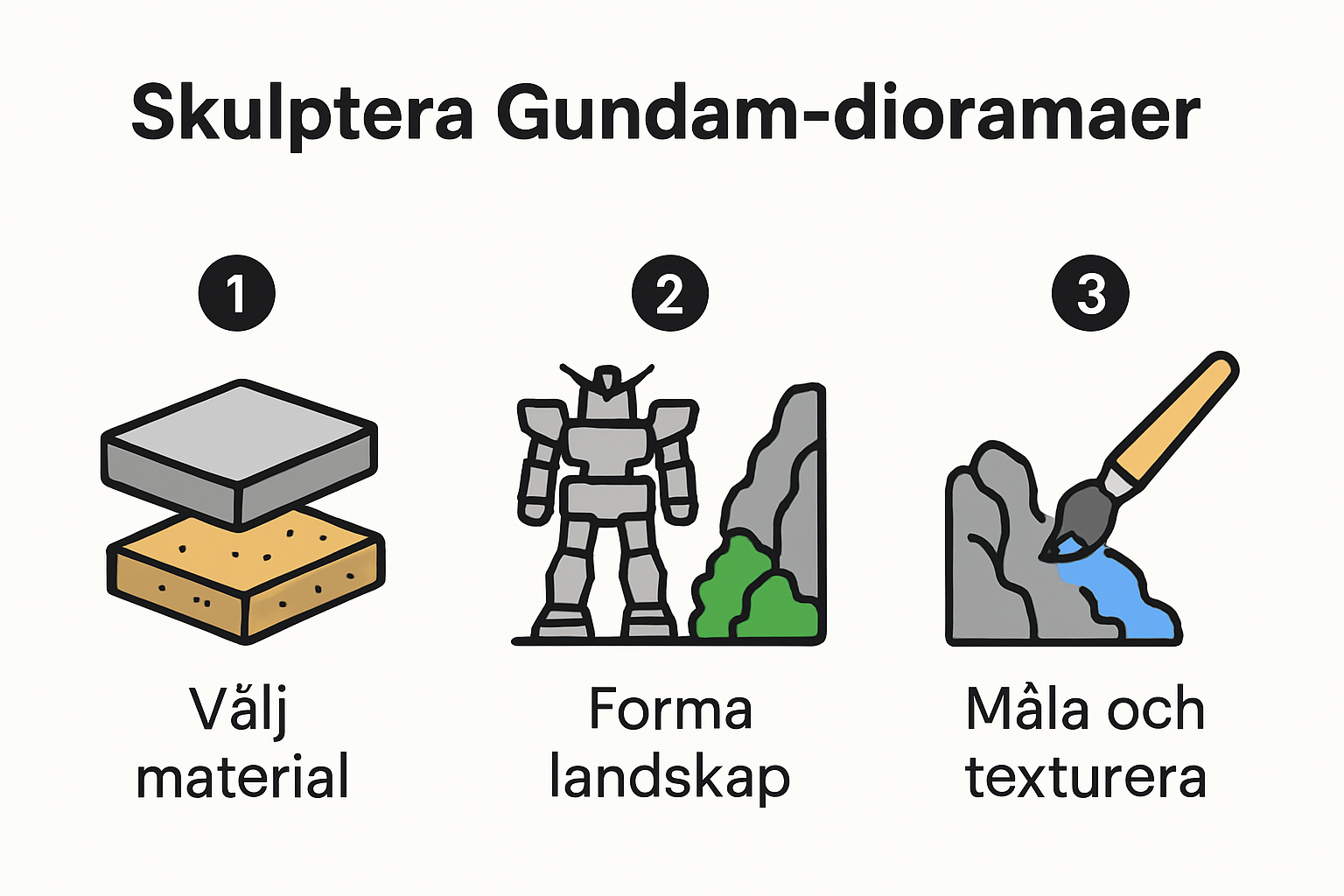
Details are crucial. Small elements like rusty metal pieces, broken-down walls, or small plant details can make a big difference. Be creative but stick to an overall vision. Be meticulous when applying these details and consider perspective and size in relation to your Gundam figure.
Paint and finish your diorama
Painting is the final step that really makes your diorama pop. Start with a base color that suits your environment - darker shades for urban scenes, earthy tones for natural landscapes. Use acrylic paints and vary the shades to create depth and shadows. Techniques like dry brushing can help you highlight details and create a more realistic feel.
Pay attention to color transitions and create natural wear and aging effects. A new environment looks different from one that has been exposed to battle or weather. Apply paint in thin layers and build up gradually for the best results. Finish by positioning your Gundam figure in a way that tells a story and creates movement.
Building a Gundam diorama is more than just a hobby - it's an art. Every step is a chance to express your creativity and tell a unique story. Be patient, experiment, and most importantly - have fun in the process!
Decorate and customize your diorama with creative details
Once you have built the basic structure for your Gundam diorama, it's time to add the details that truly make your creation stand out. Decoration is not just about filling empty spaces but about telling a story and creating a living environment that captivates the viewer.
Small details that create a big impact
Details are the heart of every fantastic diorama. Small elements like broken metal parts, overgrown plant fragments, or small signs of battle can transform your scene from an ordinary model into a story filled with life and excitement. Think of every small detail as part of a larger narrative. A half-buried ammunition box, a cracked concrete wall, or a rusty mechanism can speak volumes about the history behind your Gundam scene.
Challenge yourself to be creative with these small elements. Use micro-details from modeling accessories or create your own with simple materials like wire, small plastic pieces, or modeling clay. Explore our guide to creative modeling details for inspiration and techniques that can help you enhance your diorama's storytelling ability.
Color and aging that tell a story
Painting techniques are crucial for creating depth and authenticity in your diorama. Aging is a technique that can bring your details to life and create a sense of history and conflict. Use wash techniques with darker shades to create shadows and wear. Dry brushing can highlight edges and create a sense of wear and tear. Pay attention to how different materials age differently - metal rusts differently than concrete, and wooden surfaces weather in a unique way.
Experiment with color transitions and blend different shades to create depth. A gray concrete surface can have shades of brown, green, and blue that give it life. Consider the effect of light and how shadows and reflections can enhance the impression of age and wear.
Bring your environment to life with small narrative elements
To make your diorama truly memorable, you can add small narrative elements that create a sense of life and movement. Place small objects that indicate human presence - an abandoned helmet, a broken communication device, or fragments of a mechanical part. These small details help the viewer fill in the blanks and imagine the story behind the scene.
Consider perspective and composition. How do you position your Gundam in relation to its surroundings? Does the placement create a sense of movement or conflict? Every detail should contribute to the overall story and create a sense of excitement and mystery.
Decorating and customizing your Gundam diorama is an art that requires patience, creativity, and attention to detail. Every small detail is a brushstroke in your story. Be brave, experiment, and let your imagination guide you. Your diorama is more than a model - it's a story waiting to be told!
Tips for displaying and caring for your Gundam diorama
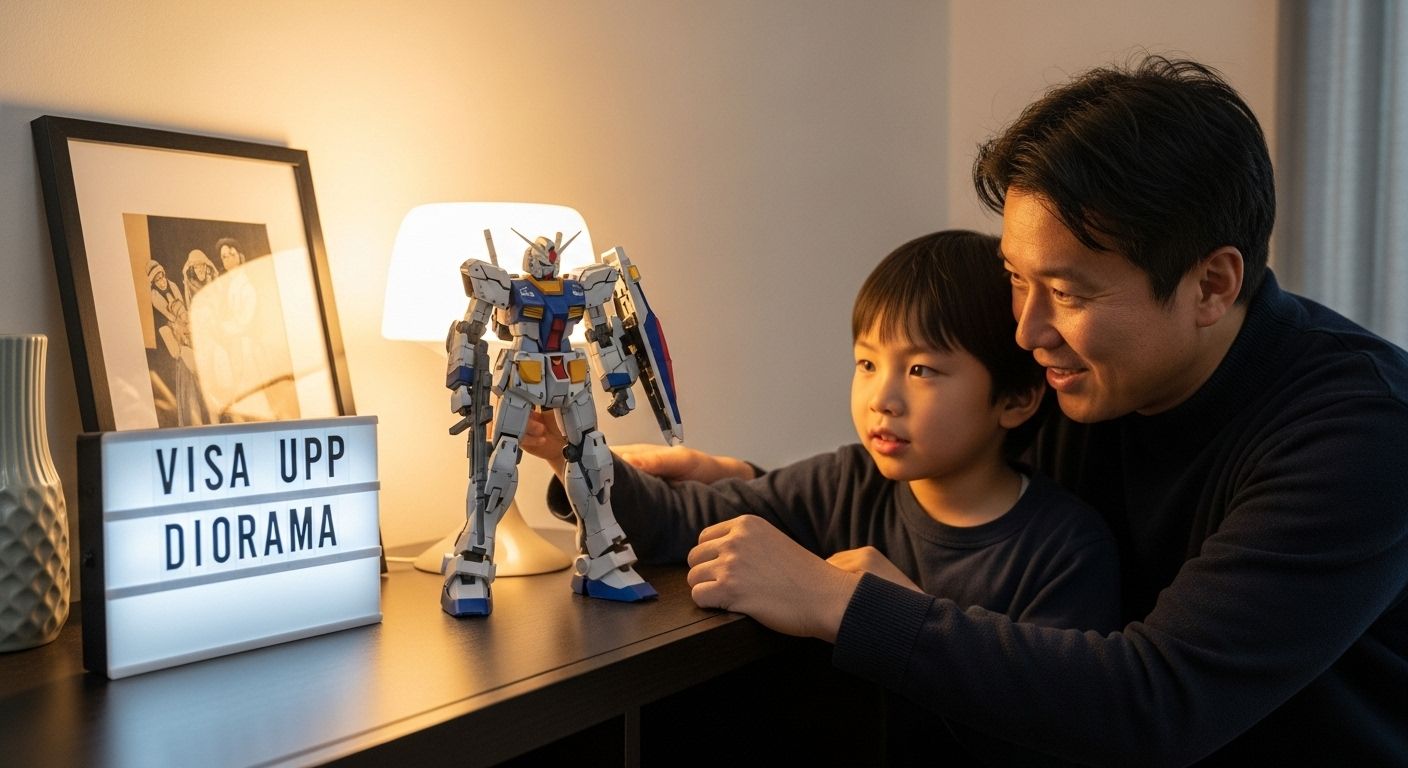
Once you have created your fantastic Gundam diorama, it's important to know how to display and preserve your artwork in the best possible way. A well-placed and well-maintained diorama can not only protect your creative investment but also become a proud centerpiece in your collection.
Below is a table summarizing important tips for displaying and maintaining your Gundam diorama:
| Tip Area | Recommendation | Purpose/Explanation |
|---|---|---|
| Display location | Indirect lighting, no sun | Protects colors and details |
| Display surface | Sufficient space | Makes the model visible from multiple angles |
| Dust management | Soft brush/air blower | Removes dust without damage |
| Temperature | 18-22°C, stable environment | Prevents deformation or cracks |
| Humidity | 45-50%, possibly silica gel | Counteracts moisture damage |
| Direct contact | Avoid fingers | Protection against oils and wear |
| Documentation | Photograph, portfolio | Preserves memory and inspires |
Find the perfect display location
The choice of display location is crucial for truly letting your diorama shine. Look for a spot with even, indirect lighting that highlights details without creating distracting shadows. Avoid direct sunlight or strong lamps that can fade colors or damage delicate details. A glass cabinet or a protected shelf away from direct sunlight and moisture is ideal.
The dimensions of your display surface are also important. Make sure there is enough space around the diorama so that viewers can see it from different angles. Explore our tips for optimal model display to get inspiration on how to best present your creation.
Protect and maintain your diorama
Preservation is key to maintaining your diorama's beauty over time. Dust is the biggest enemy of detailed models. Invest in a soft brush dust cleaner or a compressed air blower to carefully remove dust from surfaces and small crevices. Avoid touching the details directly with your hands - the oil from your skin can damage painted surfaces and delicate details.
Temperature and humidity also play a critical role. Try to keep your diorama in a room with a stable temperature, preferably between 18-22 degrees Celsius, and with a relative humidity of 45-50%. For extremely fragile models, a small silica gel packet in the display cabinet can help control humidity.
Photograph and document your diorama
Documenting your diorama is just as important as creating it. Use a tripod and a camera with a macro lens to capture the small details. Experiment with different angles and lighting conditions to truly highlight the unique character of your creation. Create a series of images that show the entire scene and then zoom in on the small narrative elements.
Additionally, you can create a digital portfolio or an album that tells the story behind your diorama. Document the process from start to finish, including sketch images, material tests, and development steps. This will not only serve as a keepsake for yourself but can also inspire other modelers.
Showcasing and caring for your Gundam diorama is about a love for details and respect for your craftsmanship. Every small action you take to protect and present your model helps preserve not only a physical creation but also the memory of your creative journey. Be proud of your work and share your passion!
Frequently Asked Questions
How do I choose the right materials for my Gundam diorama?
Choose lightweight and stable materials like foam board and MDF sheets for the base. Foam board is easy to sculpt, while MDF provides a stable base for more complex designs.
What techniques can I use to create textures in the diorama?
Use sand, gravel, and natural materials to create realistic textures. Static grass and dried plant parts add life and depth, while varying grain sizes create authentic ground conditions.
How do I paint my Gundam diorama to make it look more realistic?
Use acrylic paints and vary shades to create depth and shadows. Techniques like dry brushing can help highlight details and give a sense of wear and age.
What are the tips for displaying and maintaining my diorama?
Choose a display location with indirect lighting to protect the colors. Use soft tools to dust the model regularly and keep it at a stable temperature and humidity to prevent damage.
Take your Gundam diorama to new heights with Robotto.se
Do you dream of creating an even more detailed and impressive Gundam diorama but lack the right model kits, figures, or the small accessories that make a big difference? Many hobbyists get stuck when it comes to finding quality materials and unique models that truly elevate their project – exactly the challenges we at Robotto.se love to solve. Whether you want to build with foam board, are looking for Gundam model kits, or need smart paint sets and tools, we have it all in one place.
Let your creativity grow without limits. Explore our wide range of model kits and accessories for Gundam and model building. Create a diorama that truly stands out and be inspired by new products and possibilities at Robotto.se today. Your next masterpiece awaits – start browsing our unique models and get everything you need delivered straight to your home.
Recommended
- Build fantastic robots with Robotto.se - Your source for robot model kits
- Mobile Suit Gundam: Classics that influence today's anime – Robotto
- 5 Popular Board Games for the Family – Robotto
- How to create your own board game rules – Robotto
- Questions and answers about custom merchandise solutions – Runns