

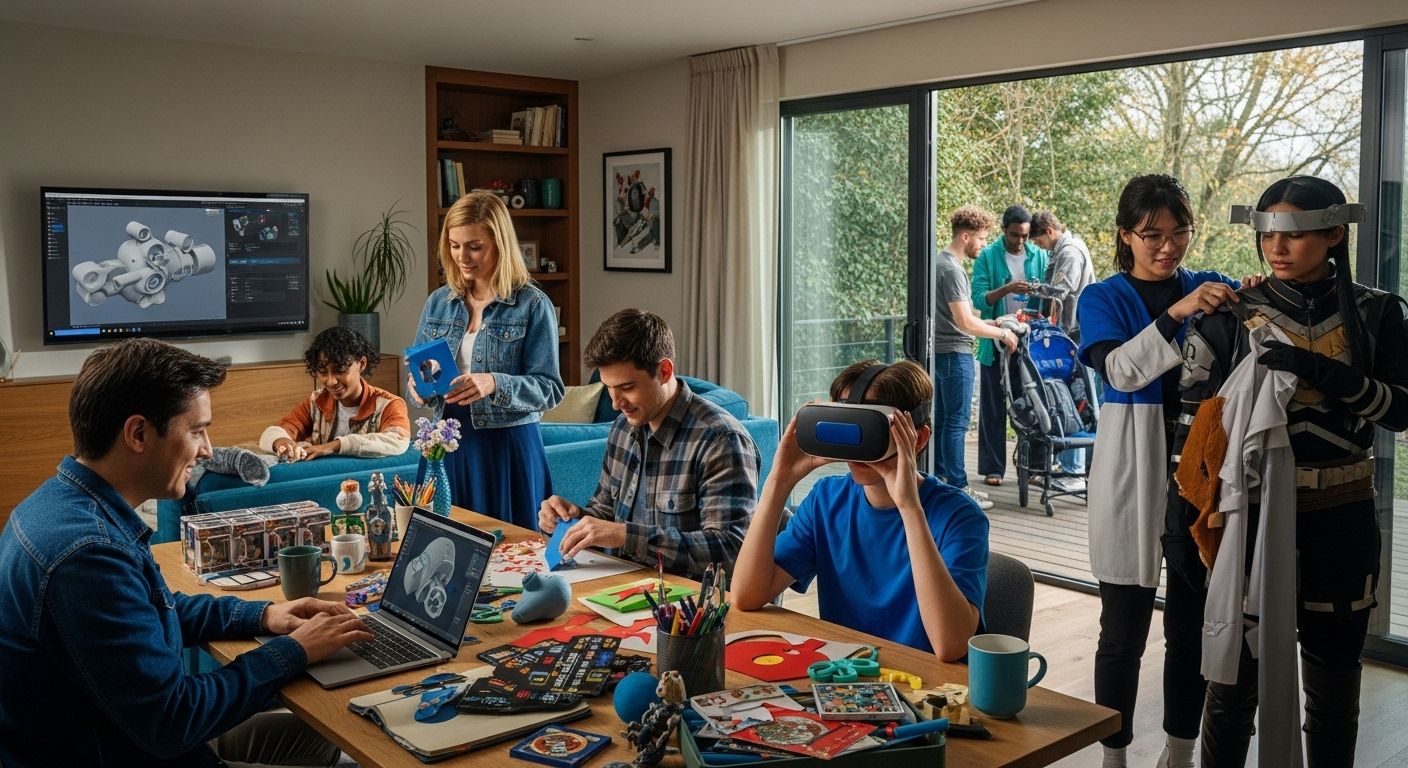
Digital modeling has rapidly become one of the world's most popular creative hobbies, and people are now using the same software as professional filmmakers. Unexpectedly, it no longer requires expensive equipment or deep technical knowledge. More people than ever can create 3D masterpieces at home at their kitchen table with tools like Blender and Maya, and interest has exploded worldwide. Suddenly, it's possible to transform imagination into digital reality – and anyone can do it.
Table of Contents
- Digital Modeling as a Hobby
- Recycling and Sustainable Craftsmanship
- Virtual Reality and Gaming Trends
- Cosplay and Creative Costumes
- Collectibles and Marketplaces
- Nature and Outdoor Life as a Hobby
- Online Courses for Hobby Development
Quick Summary
| Takeaway | Explanation |
|---|---|
| Digital modeling is a growing hobby. | Access to powerful tools makes modeling more inclusive and creatively satisfying. |
| Sustainable craftsmanship reduces waste. | Through material recycling, functional and beautiful objects are created, promoting environmentally friendly creation. |
| VR is changing gaming experiences. | Immersive experiences blur the lines between reality and games, with new interactive possibilities. |
| Cosplay combines technology and creativity. | Modern costumes incorporate advanced technological elements, enhancing storytelling and interaction. |
| Online courses revolutionize hobby learning. | Access to tailored education combined with AI and interactive methods deepens learning. |
1: Digital Modeling as a Hobby
In recent years, digital modeling has evolved from a specialized technique into a fascinating hobby that attracts both beginners and experienced enthusiasts. With the rise of powerful 3D modeling tools and accessible technology, this creative pursuit has become more inclusive and exciting than ever before.
At the heart of digital modeling is the ability to create stunning three-dimensional objects from scratch, whether they are architectural models, game characters, or unique figure designs. Technology has made it possible for hobbyists to realize their most advanced visualizations with astonishing precision.
According to Smithsonian Magazine, digital modeling has become a revolution in hobby culture, where amateurs and professionals meet in a creative ecosystem. Some of the most important tools for digital modelers include:
- 3D modeling software such as Blender and Maya
- Digital drawing tablets for precise detail work
- Rendering software for photorealistic results
For the modern hobbyist, digital modeling offers a unique combination of technical skill and artistic expression. By mastering digital tools, one can create everything from hyper-realistic architectural models to fantastic character designs that previously only existed in one's imagination.
Technology is continuously evolving, meaning the hobby constantly gains new dimensions. The future of digital modeling will likely include even more advanced tools, improved AI assistance, and even more intuitive interfaces that will enable more people to explore this fascinating creative world.
Whether you are interested in architecture, game development, animation, or simply want to explore a new creative hobby, digital modeling offers endless possibilities for those who dare to explore its potential.
2: Recycling and Sustainable Craftsmanship
Sustainable craftsmanship has emerged in recent years as a powerful trend among creative hobbyists seeking meaningful and environmentally conscious ways to express their creativity. This movement is not just about creating objects, but also about doing so with respect for our planet's resources and minimizing unnecessary waste.
Recycling in craftsmanship involves transforming materials that would otherwise have been discarded into beautiful and functional objects. It's about seeing potential in what others see as trash and turning it into art, utility items, or entirely new creations.
According to research on sustainable making, several critical aspects drive this trend forward:
- Awareness of environmental impact among modern artisans
- Creative reuse of materials such as wood, metal, and textiles
- Reduced consumption of new raw materials
Plastic, once considered a problematic material, has now become a fascinating resource for creative recycling projects. Artists and craftspeople are learning techniques to melt, mold, and recreate plastic objects into new, exciting designs.
Textile recycling is another area where sustainable craftsmanship truly flourishes. Old clothes can be repurposed into accessories, bags, or entirely new garments. This not only reduces textile waste but also gives new life to materials that would otherwise have ended up in landfills.
For the modern hobbyist, sustainable craftsmanship is about combining creativity with responsibility. It's an opportunity to express oneself artistically while considering our planet's limited resources. Every recycled material represents a story of transformation and potential.
The future of sustainable craftsmanship will likely include even more sophisticated techniques for material recycling, digital design tools for optimization, and global networks for knowledge sharing among creative upcyclers.
3: Virtual Reality and Gaming Trends
Virtual reality (VR) has evolved from a futuristic technology into a real hobby that changes how we experience entertainment, education, and social interaction. By 2025, VR and gaming are expected to merge in ways that previously seemed unimaginable.
According to IEEE Spectrum, the global VR market is growing rapidly and is expected to exceed $22 billion in the coming years. This explosion of interest is driving entirely new forms of interactive experiences.
Some of the most exciting trends in VR and gaming include:
- Hyper-realistic game worlds that blur the line between real and digital
- Social VR platforms where players can meet and interact globally
- Training and educational simulations that go beyond traditional pedagogy
Immersive gaming experiences are now taking a step further than ever before. Players can not only see worlds but literally immerse themselves in them. Hand movements, body language, and even emotional reactions can now be translated directly into the game universe.
Technology has also begun to explore creative interfaces between different fandoms, where players can blend and create entirely unique universes beyond traditional genre boundaries.
With advancements in haptic technology and neural interfaces, future VR will likely offer even more sophisticated sensory experiences. Imagine games where you not only see and hear, but also feel and experience worlds with an unprecedented intensity.
For hobbyists and gamers, this technology opens up endless possibilities to explore, create, and experience stories in ways that were previously unthinkable.
4: Cosplay and Creative Costumes
Cosplay has evolved from a niche hobby into a global cultural movement that celebrates creativity, storytelling, and personal transformation. In 2025, we are seeing an explosion of innovative trends that challenge traditional boundaries of costume design and character roles.
According to the latest cosplay trend report, modern cosplayers are integrating technology and innovation in ways that previously seemed impossible. Costumes have become more than just garments - they are now complete stories and experiences.
Some of the most exciting trends in cosplay include:
- Technologically advanced costumes with built-in sound and light effects
- Boundary-crossing character representations
- Interactive digital elements that enhance the performance
Technology integration has become a central part of modern cosplay creations. LED lighting, moving parts, and even augmented reality components transform costumes from static garments into living, dynamic works of art.
Explore our guides for convention preparations to understand how professional cosplayers prepare for events. Inclusivity has also become a strong trend, with cosplayers challenging traditional gender roles and representation by interpreting characters in creative and inclusive ways.
The new generation of cosplayers no longer views their costumes as just clothes, but as complex storytelling where every detail has meaning. They don't just create costumes - they build universes, explore identities, and create community.
The future of cosplay will likely continue to blur the lines between physical and digital experiences, with even more sophisticated technological integrations and even bolder creative expressions.
5: Collectibles and Marketplaces
The collectibles market is undergoing a dramatic transformation in 2025, where digital platforms and global networks are creating entirely new opportunities for collectors and enthusiasts. Traditional physical collections are now meeting digital marketplaces with sophisticated valuation tools and international reach.
According to the National Bureau of Economic Research, the collectibles market has evolved from a niche interest into a complex economic ecosystem with sophisticated valuation and trading patterns.
Some of the most important trends in the collectibles market include:
- Blockchain-validated authenticity certificates
- Global digital auction platforms
- Real-time valuation through AI algorithms
Specialized collections have become increasingly valuable, particularly in areas such as anime, science fiction, and limited editions. Collectors are now seeking not just objects, but complete stories and historical contexts.
The digital era has revolutionized how we discover, value, and trade collectibles. Platforms that combine expert knowledge, community-driven valuation, and secure trading are becoming increasingly common.
Explore our selection of unique collections where passionate collectors can find rare and sought-after items. Modern collectors are no longer just owners but also curators who document and tell stories through their collections.
Technological advancements such as artificial intelligence and blockchain will likely continue to change the world of collectibles. Imagine platforms where every object has a digital identity, complete with history, authenticity certificates, and real-time valuation.
The future of the collectibles market is not just about owning things, but about being part of a global community that shares passion, knowledge, and stories.
6: Nature and Outdoor Life as a Hobby
Nature and outdoor life have evolved from a simple leisure activity into a complex and multifaceted hobby that offers much more than just physical activity. In 2025, we see a clear trend where people seek deeper, more meaningful experiences in nature, beyond traditional outdoor activities.
According to the USDA Forest Service, interest in outdoor activities is steadily increasing, with over 160 million people visiting national forests and grasslands each year. This shows a strong longing for authentic nature experiences.
Some of the most exciting trends in nature and outdoor life include:
- Technologically supported nature experiences
- Sustainable and responsible nature tourism
- Wellness and mental health through nature contact
Micro-adventures have become a new popular genre in outdoor life. These are short, local adventures that can be undertaken close to home, often with minimal equipment and maximum experience. The concept is perfect for modern people with limited time but a great desire for adventure.
Paradoxically, technology has begun to be used to improve and document nature experiences. GPS tracking, nature apps that identify plants and animals, and community platforms for outdoor enthusiasts have made the hobby's community more cohesive than ever.
But the trend is not just about technology - it's about reconnecting with nature. Modern outdoor practitioners see their activities as a way to understand ecosystems, promote sustainability, and foster personal development.
The future of outdoor life will likely continue to integrate technology, sustainability, and personal development in ways we cannot yet imagine. It's no longer just about visiting nature, but about being a part of it.
7: Online Courses for Hobby Development
Online courses have revolutionized how people learn new skills and develop their interests. In 2025, we see a whole new level of accessibility and specialization in hobby education, where digital platforms offer tailored learning experiences for enthusiasts worldwide.
According to research from the Poultry Science Association, online pedagogy has developed dramatically, with an increased focus on student engagement and interactive learning methods.
Some of the most exciting trends in online courses for hobby development include:
- Micro-education with very specific skills
- Interactive workshops with direct feedback
- Global community-based education platforms
Specialized hobby education has become more sophisticated. From advanced model making to niche artistic techniques, modern online courses offer a previously unthinkable level of detailed knowledge.
AI-driven personalized tutoring is also becoming a reality. Intelligent systems can now analyze a student's progress, suggest individual areas for improvement, and tailor educational content in real-time.
Courses have also become more practice-oriented and results-focused. Instead of lengthy theoretical reviews, participants receive concrete, actionable projects that can be directly applied to their hobby.
The future of online courses will likely combine virtual reality, AI tutoring, and global expert networks in ways that will completely transform how we learn and develop our interests.
Below is a summary table that provides an overview of the article's most important hobby trends for 2025, the benefits they offer, and key takeaways from each area.
| Trend/Area | Description and Key Benefits |
|---|---|
| Digital Modeling | An accessible and creative hobby with modern tools (Blender, Maya) and AI support. Enables advanced 3D design for all levels. |
| Recycling & Sustainable Craftsmanship | Creating with recycled resources reduces waste and environmental impact. Encourages creativity and awareness of consumption and material choices. |
| Virtual Reality and Gaming | VR and gaming provide immersive, interactive experiences. Social VR platforms and innovative simulation games are becoming increasingly common. |
| Cosplay & Creative Costumes | Development towards tech-integrated and interactive costumes. Focus on storytelling, inclusion, and advanced design with new materials and effects. |
| Collectibles & Marketplaces | Digital tools, blockchain, and AI revolutionize collectible valuation. Community, history, and global trading platforms create new opportunities. |
| Nature & Outdoor Life | More people are seeking meaningful micro-adventures and outdoor activities. Tech support, sustainability, and personal development are central. |
| Online Courses & Hobby Development | Specialized, interactive online education. AI support, concrete projects, and global networks for both beginners and experienced enthusiasts. |
Discover your next hobby experience at Robotto.se
You've read about new trends like digital modeling, creative collectibles, and cosplay – but how do you turn all these ideas into reality? Many enthusiasts lack access to the right kits, figures, or cosplay accessories that inspire development and long-lasting interest. At Robotto.se, you'll find everything in one place and avoid searching for specialized items. New models, exclusive collectibles, and accessories for both building and cosplay are available directly, so you can quickly follow this year's hottest hobby trends.
Start exploring our wide range of model kits and figures today. Challenge yourself to create something new, build your collection, or take the step towards your first cosplay – the possibilities are endless! Visit Robotto.se and take control of your hobby journey before this year's most sought-after products run out.
Frequently Asked Questions
What is digital modeling and how can I get started with it as a hobby?
Digital modeling is the creation of three-dimensional objects using software. You can start by using tools like Blender or Maya, and many online courses are available to help you learn the basics.
How can I use recycled materials in my crafting?
Recycling in crafting involves transforming materials like plastic, wood, and textiles into new creations. You can start by collecting household items that you would otherwise throw away and experiment with different techniques to give them new life.
What are the trends in virtual reality and gaming for 2025?
Trends in VR include hyper-realistic game worlds, social VR platforms, and innovative educational simulations. The technology is constantly evolving and offers players new, interactive experiences.
What should I consider when creating cosplay costumes?
Modern cosplay costumes involve technical integration such as LED lights and interactive elements. It's important to consider material choices and details to create a costume that truly represents the character you want to portray.