

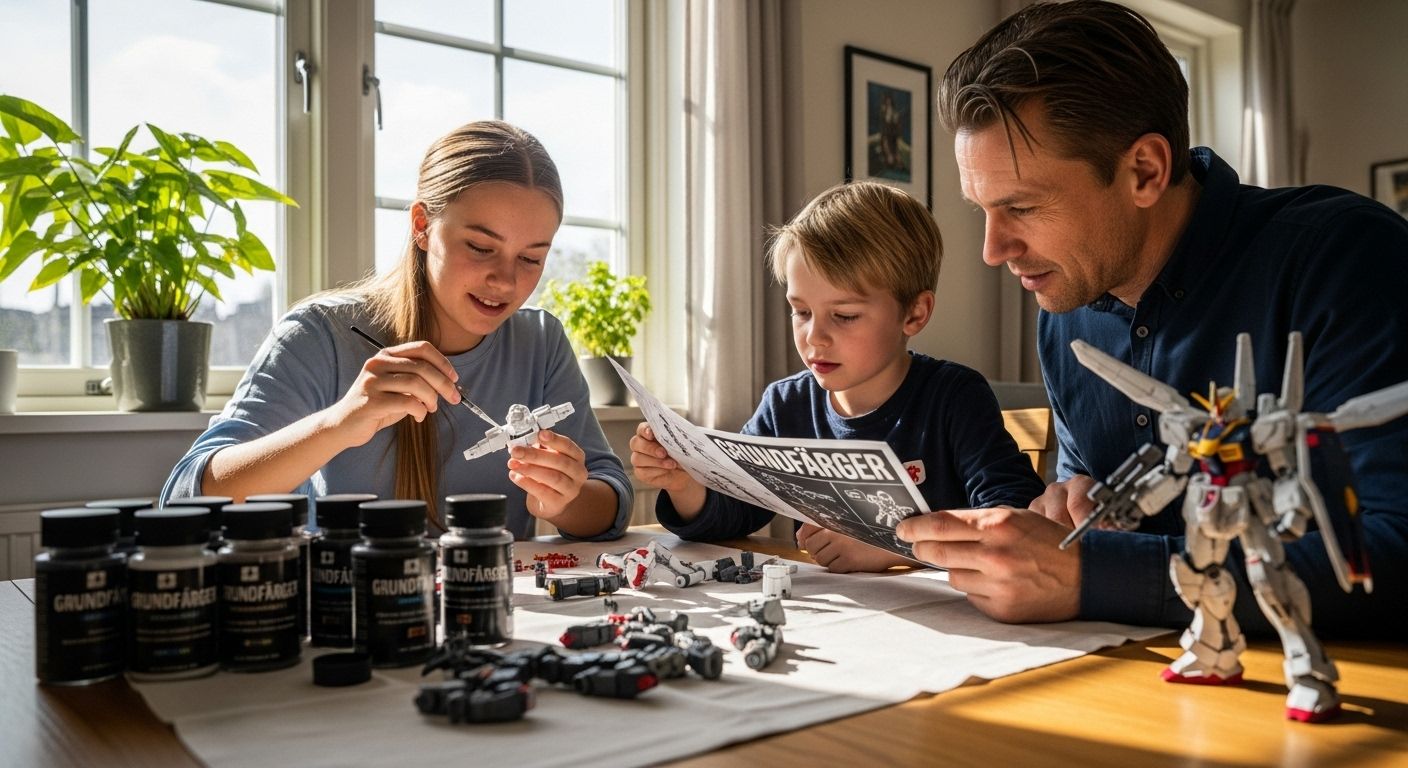
Building a Gundam model isn't just about assembling parts and gluing on weapons. The colors make all the difference and set the tone for the final result. Surprisingly, it's the classic primary colors – blue, red, and white – that have been behind the iconic look of the Gundam series since 1979. But if you only stick to these basic shades, you'll miss the hidden magical layer that makes details pop and your model feel unique. Unexpectedly, surface preparation and choosing the right base coat are as crucial as the painting itself – and here we dig where other modelers only scratch the surface.
Table of Contents
- What are Base Colors for Gundam Models?
- How to Choose the Right Base Color?
- Tips for Applying Base Colors
- Common Mistakes to Avoid When Painting
Summary
| Takeaway | Explanation |
|---|---|
| Choose base colors based on original design | Stay true to the model's original color palette for best authenticity. |
| Always prepare the model surface thoroughly | Clean and sand surfaces to ensure good paint adhesion. |
| Apply several thin layers of paint | Thin layers provide a smoother finish and retain details better. |
| Avoid common preparation mistakes | Clean parts thoroughly to avoid paint adhesion issues. |
| Check paint compatibility with materials | Use paints specifically designed for plastic models for best results. |
What are Base Colors for Gundam Models?
When you start building Gundam models, the choice of base colors is crucial for the final result. Base colors form the foundation for the entire model's visual expression and influence the final level of detail and aesthetics. They represent the primary colors used to cover large areas of the Gundam robot and create the basis for its characteristic design.
Classic Base Colors in the Gundam World
In the Gundam universe, color choices have historically been very significant. According to Wikipedia, the original RX-78-2 Gundam was designed with a color palette consisting of blue, red, and white. These colors were strategically chosen to appeal to a younger audience and differentiate Gundam from other mech designs of that era.
The most common base colors include:
- White: Symbolizes purity and technologically advanced design
- Blue: Represents calm and technical precision
- Red: Signals power and aggressiveness
- Gray: Indicates mechanical robustness
Here's a table summarizing the meanings of classic Gundam base colors:
| Color | Symbolism | Usage |
|---|---|---|
| White | Purity, technological development | Main body, legs, arms |
| Blue | Calm, technical precision | Chest, details |
| Red | Power, aggressiveness | Feet, accents |
| Gray | Mechanical robustness | Joints, weapons, joints |
Technical Aspects of Choosing Base Colors
When selecting base colors for Gundam models, several important factors need to be considered. Mech9.com offers detailed color guides that help model builders choose the right shades and brands. Professional model builders recommend using specific brands designed for plastic models to ensure optimal coverage and finish.
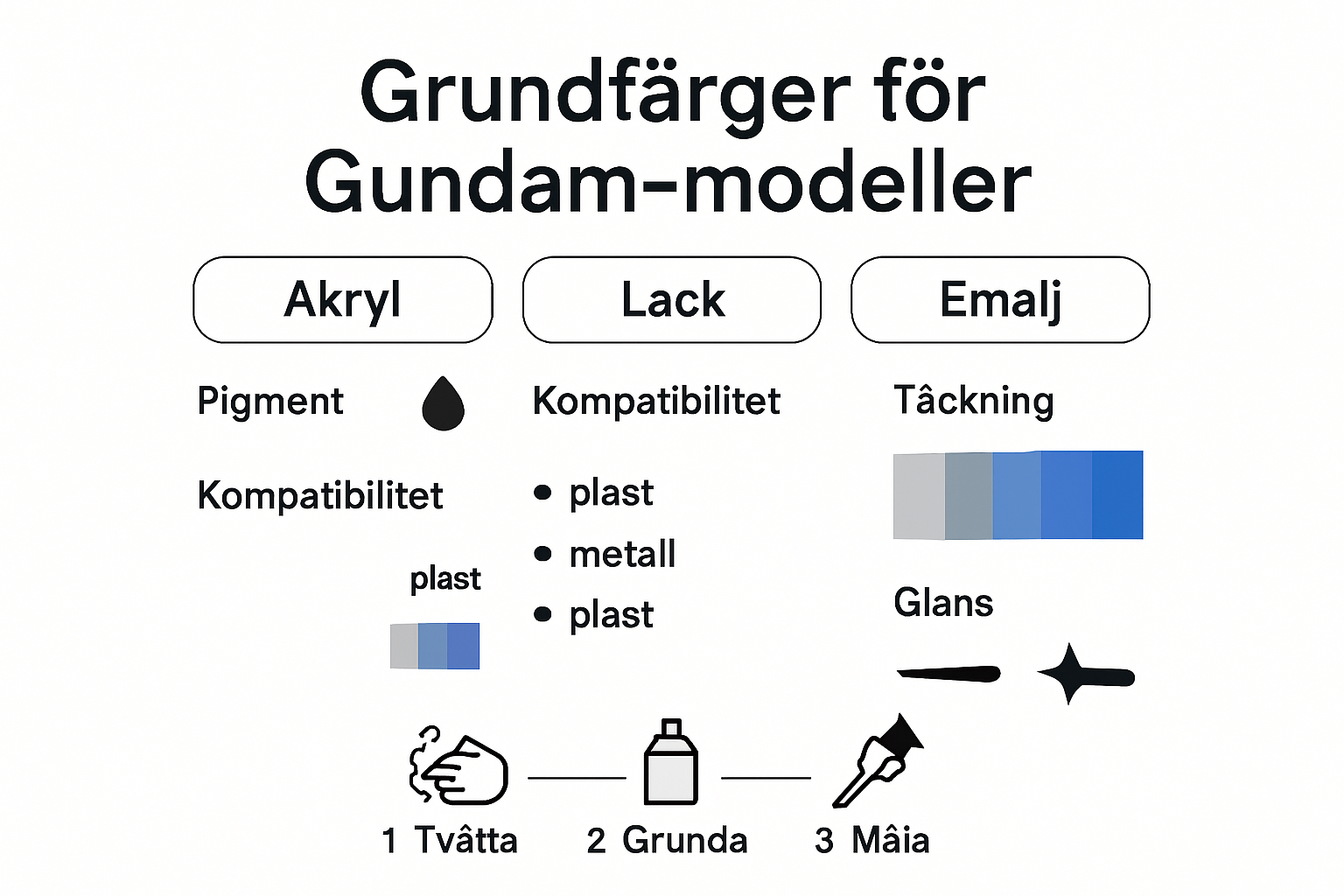
When choosing base colors, you should consider:
- Paint opacity
- Compatibility with the model material
- Final gloss and finish
- Possibility of detailed decorations
The choice of base colors is not just about aesthetics but also about technical precision. Each color choice communicates something about the model's character and origin. A military gray Gundam signals completely different properties than a light and elegant variant with white and blue hues.
Whether you're a beginner or an experienced model builder, understanding base colors is crucial. They not only shape the model's appearance but also tell a visual story about the robot behind the colors. With the right knowledge and attention to detail, you can create a Gundam model that both honors the original and expresses your personal creativity.
How to Choose the Right Base Color?
Choosing the right base color for your Gundam model is a process that requires careful consideration and knowledge. It's not just about choosing a color that looks good, but about creating an authentic and aesthetically pleasing representation of your model.
Factors Influencing Color Choice
When choosing a base color, several critical aspects need to be considered. The Bandai Color Guide recommends analyzing the model's original design and context. Each Gundam series has its unique color schemes that reflect the story's theme, the pilot's personality, or the specific combat unit's characteristic traits.
Important factors include:
- Original design: Stay true to the original model's color palette
- Personal style: Dare to make creative interpretations
- Model manufacturer: Different series have different color traditions
- Finish: Matte, glossy, or metallic surface
Technical Considerations in Color Choice
Technical details play a crucial role in the color selection process. Mech9.com emphasizes the importance of choosing paints specifically developed for plastic models. Common recommendations include:
- Use acrylic paints specially designed for model building
- Check the paint's compatibility with the plastic material
- Consider the paint's coverage ability
- Test the paint on a small, invisible area first
Professional model builders emphasize that the base coat should not only look good but also create a solid foundation for further detailing. Some paints absorb details better than others, and the choice can affect the entire model's final appearance.
The color choice is a balance between technical precision and artistic creativity. A military gray Gundam signals different characteristics than a bright, elegant variant with white and blue hues. Your color choice tells a story about the model before you've even added any details.
Tips from experts include studying reference images, looking at original designs, and experimenting carefully. Purchase smaller paint cans initially to test and adjust before completing the entire project. Don't be afraid to redo or use multiple layers for optimal coverage.
Whether you're aiming for maximum authenticity or want to create a unique interpretation, choosing the base color is about understanding your model's soul. With proper preparation, technical knowledge, and creative courage, you can create a Gundam model that both honors the original and expresses your personal vision.
Tips for Applying Base Colors
Applying base colors is a critical phase in Gundam model building that requires precision, patience, and the right technical knowledge. A correctly applied base coat not only creates an aesthetically pleasing foundation but also ensures that subsequent paint layers and details adhere perfectly.
Preparing the Model Surface
According to PPG Industries, proper surface preparation is crucial for optimal paint adhesion. Before applying the base coat, you must carefully clean and prepare the model parts. This means:
- Wash parts with mild soap to remove grease and dirt
- Dry thoroughly with a soft cloth
- Gently sand the surface with fine sandpaper for better adhesion
- Use a primer specifically designed for plastic models
The following table illustrates the recommended steps and the purpose of each step in preparing the model surface:
| Step | Action | Purpose |
|---|---|---|
| 1. Cleaning | Wash parts with mild soap | Remove grease and dirt |
| 2. Drying | Dry with a soft cloth | Avoid water droplets & residue |
| 3. Sanding | Gently sand with fine sandpaper | Improve paint adhesion |
| 4. Priming | Apply plastic model-specific primer | Ensure optimal base for paint |
Correct Application Techniques
Research published in Coatings emphasizes the importance of optimal parameters for material protection through primer application. Professional techniques for base coat application include:
- Use thin, even layers
- Hold the spray can or brush at a consistent distance
- Apply paint in crisscross motions for even coverage
- Allow each layer to dry completely before applying the next
- Avoid overpainting which can obscure details
Common Mistakes and How to Avoid Them
Model builders often make specific mistakes that can affect the final result. Here are some important points to consider:
- Temperature: Apply paint at room temperature, ideally between 20-25 degrees Celsius
- Humidity: Avoid high humidity environments that can affect drying time
- Thickness: Too thick layers can obscure the model's fine details
- Waiting time: Allow sufficient time between each paint layer
A tip from experienced model builders is to use a primer patch or a test area before applying paint to the entire model. This helps you adjust your technique and ensure optimal coverage.
An innovative approach recommended by experts is to use multiple thin layers instead of one thick layer. This approach provides more even coverage, preserves the model's details, and reduces the risk of paint clumps or unevenness.
Every Gundam model is unique, and base coat application is your chance to create a perfect foundation for the final masterpiece you're aiming for. With proper preparation, technique, and patience, you can achieve a professional finish that makes your model stand out. Remember, each layer is one step closer to your vision of the perfect Gundam model.
Common Mistakes to Avoid When Painting
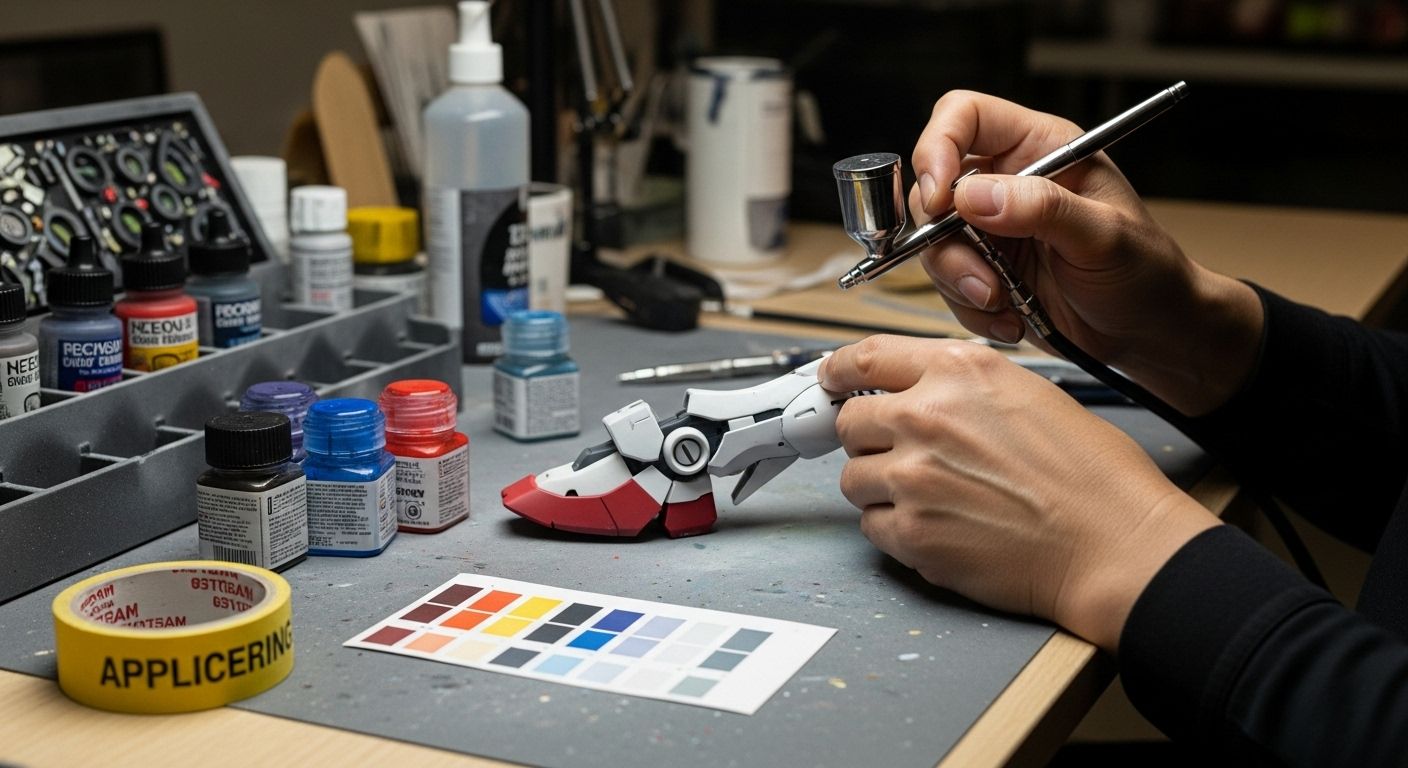
When painting Gundam models, there are several critical mistakes that can jeopardize the final outcome of your entire project. Knowing and preventing these common pitfalls can significantly elevate the quality of your model and make the difference between an amateur and a professional finish.
Preparation Mistakes
According to FineScale Modeler Magazine, cleaning the model before painting is crucial. Many model builders make the mistake of skipping thorough cleaning, which can lead to poor paint adhesion. Common preparation mistakes include:
- Not washing model parts before painting
- Ignoring grease stains from fingerprints
- Overlooking small particles and mold lines
- Failing to sand surfaces for better adhesion
Paint Application Pitfalls
The Brush Smith warns against direct application of undiluted paint. This can result in uneven coverage and loss of fine model details. Critical mistakes in paint application include:
- Applying too thick layers of paint
- Using undiluted paint directly from the can
- Painting in the wrong room temperature
- Ignoring drying times between layers
- Using the wrong type of brush or spray technique
Technical and Material Mistakes
Scale Model Aircraft emphasizes the importance of using primer. Skipping this step can lead to disastrous results. Other technical mistakes model builders often make are:
- Lack of priming: Missing the crucial preparation step
- Incorrect paint compatibility: Using paints that are not suitable for plastic material
- Poor ventilation: Painting in cramped, poorly ventilated areas
- Substandard equipment: Using cheap or inappropriate brushes and spray paints
A professional tip is to always apply several thin layers instead of one thick layer. This approach provides more even coverage, preserves the model's details, and reduces the risk of paint clumps.
Note that every mistake is a learning opportunity. Experienced model builders recommend having a test area or a spare part where you can practice and experiment with different techniques before applying paint to the entire model.
Last but not least: patience is key. Don't rush through the process. Every layer, every brushstroke is a step closer to the perfect Gundam model. With proper preparation, technique, and attitude, you can avoid these common mistakes and create a model you can truly be proud of.
Frequently Asked Questions About Base Colors for Gundam Models
What are the classic base colors in the Gundam world?
The classic base colors in the Gundam world include white, blue, and red. These colors are used to create the iconic design of Gundam models.
How do you choose the right base color for your Gundam model?
To choose the right base color, you should consider the model's original design, your personal style, and the kind of finish you want—matte, glossy, or metallic.
What is important to consider when applying base colors?
It is important to prepare the surface thoroughly by cleaning and sanding for best adhesion. Apply several thin layers of paint instead of one thick layer to avoid obscuring details.
What mistakes should be avoided when painting Gundam models?
Common mistakes include skipping cleaning of model parts, applying too thick layers of paint, and not using primer, which can lead to poor paint adhesion.
Take your Gundam models to the next level with the right tools and paints
Are you tired of your Gundam models not quite achieving that professional look? You know how crucial primers and the right application technique are for creating depth and impressive details. Many stop at reading guides but then lack access to quality products and the right accessories. At Robotto.se, you'll find a unique selection of model kits, paints, and tools specifically chosen for model builders who want to take their hobby seriously.

Elevate your Gundam projects with accessories that make a difference. Visit Robotto.se today and discover our complete range of Gundam model kits, primers, and paint sets. Get what you need to avoid common mistakes and achieve a standout result. Your next master model awaits – start shopping now.