

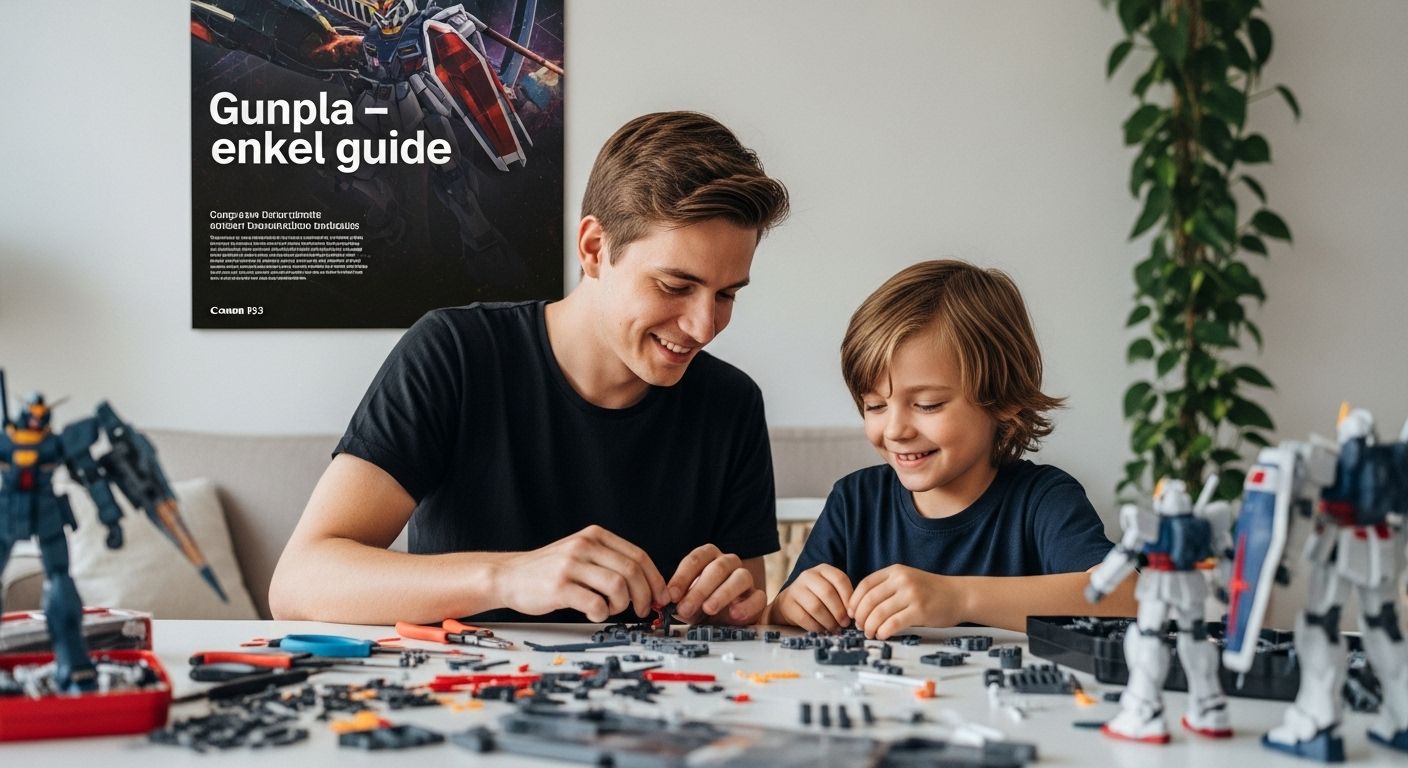
Gunpla has quickly become a global hobby favorite, with model kits inspired by the Gundam universe attracting both young and old. There are over 5000 different models to choose from and new enthusiasts join every day. Somewhat unexpectedly, many have discovered that the assembly and detailed work provide a sense of mindfulness that few other hobbies offer. Who would have thought that a plastic robot from the 80s would become one of our era's most relaxing and creative activities?
Table of Contents
- What is Gunpla and why is it popular?
- How to choose your first Gunpla model
- Tools and materials to get started
- Step-by-step: building and improving your Gunpla
Quick summary
| Key Point | Explanation |
|---|---|
| Choose a beginner-friendly model | Start with Entry Grade or early High Grade models for a positive building experience. |
| Use the right tools | Nippers and hobby knives are crucial for ensuring a smooth and detailed building process. |
| Focus on preparation | Prepare your workspace and organize parts before starting construction for a more efficient process. |
| Assemble carefully | Follow instructions step by step and gently push parts together to avoid damage. |
| Experiment with techniques | Improve your models through panel lining and color modification for a more personal style. |
What is Gunpla and why is it popular?
Gunpla is much more than just a hobby activity - it's a creative passion that unites model builders worldwide. The term "Gunpla" is an abbreviation for "Gundam Plastic Model," referring to the detailed plastic models based on the robots from the beloved Japanese animated series Mobile Suit Gundam. These model kits give enthusiasts the opportunity to build their own accurate replicas of iconic mecha from the franchise.
The origin and development of Gunpla
When the Gundam series launched in the 1980s, it created a whole new modeling industry. From simple, pre-glued models to advanced, highly detailed kits, Gunpla has evolved tremendously. Modern Gunpla kits offer different difficulty levels suitable for everyone from beginners to experts. They usually come in various colors and can be assembled without glue, making them extremely user-friendly.
Manufacturers like Bandai have continuously improved the design, with kits requiring minimal tools and producing fantastic results straight out of the box. This has made Gunpla accessible to a wide audience, from young enthusiasts to adult collectors seeking a relaxing and creative pastime.
Why Gunpla has become so popular
The popularity of Gunpla is based on several fascinating aspects. Firstly, it offers a unique combination of creative expression and technical craftsmanship. Each model is like a mini-artwork built piece by piece. Enthusiasts can customize their models by painting, adding details, or even creating their own design variations.
Moreover, Gunpla has a strong community around the world. Enthusiasts share their builds online, participate in exhibitions and competitions, and create networks that go beyond the model building itself. Exploring the history of the Gundam universe gives you a deeper understanding of the cultural context behind these fascinating models.
Another important aspect is the therapeutic effect of building Gunpla. The process requires focus, patience, and precision - something many people find relaxing amidst a stressful daily life. It's a form of meditation where every small detail is carefully and precisely put into place.
Whether you are a passionate fan of the Gundam series, a model building enthusiast, or someone just looking for a creative hobby, Gunpla offers a fantastic opportunity to express yourself and create something unique. From the simple beginner models to the most complex kits, there is always a Gunpla that suits you.
How to choose your first Gunpla model
Choosing your first Gunpla model can be both exciting and overwhelming. Each model represents a unique story from the Gundam universe, and the choice affects your first experience of this fascinating hobby. There are several important factors to consider when making your first purchase to ensure a positive and fun building experience.
Understanding the difficulty levels
Here is an overview table comparing the most common Gunpla difficulty levels and helping beginners choose the right starting level:
| Difficulty Level | For Whom | Characteristics |
|---|---|---|
| Entry Grade (EG) | Beginners | Fewer parts, easy to assemble, requires few tools |
| High Grade (HG) | Beginners/enthusiasts | More details, better articulation, more parts |
| Master Grade (MG) | Experienced builders | Larger models, advanced parts & mechanics |
| Real Grade (RG) | Experienced builders | High level of detail, smaller scale, advanced construction |
| Perfect Grade (PG) | Experts | Very large, complex, and highly detailed kits |
Gunpla models are classified into different difficulty levels that help beginners find the right starting point. Entry Grade (EG) is the easiest level, perfect for people just starting their Gunpla journey. These models have fewer parts, require minimal tools, and can be assembled without glue. High Grade (HG) is the next step and offers more detailed models with better articulation and more building elements.
For beginners, Entry Grade or early High Grade models are recommended. These provide a pleasant introduction to the modeling process without being too complex. Choose models with fewer small parts and clear instructions. Brands like Bandai have special series specifically designed for new enthusiasts, making the entry even easier.
What factors should you consider
When choosing your first Gunpla, several important aspects should be considered. Budget is a key factor - beginner models are usually more affordable and give you the chance to build skills without a large financial investment. Personal preference also plays a role. Choose a model based on a Mobile Suit that truly fascinates you from the Gundam series. Exploring the history of Gundam characters can help you find a model that matches your interests.
Size is another important aspect. The 1/144 scale is popular among beginners as the models are relatively small, easy to handle, and require less space. Colored plastic is also an advantage for the first build - many Entry Grade and some High Grade models come pre-molded in different colors, which reduces the need for extensive painting.
Also, choose models with good reviews from other beginners. Community forums and websites dedicated to Gunpla can provide valuable insights into which models are most accessible and enjoyable for first-time builders. Look for models described as "beginner-friendly" or "easy to build."
Your first Gunpla model is the beginning of a fantastic journey into a creative and engaging hobby. Take your time to research, don't be afraid to ask for advice from experienced builders, and remember that every model is a unique opportunity to learn and develop your skills. No matter which model you choose, it's about having fun and expressing your creativity through this fascinating craft.
Tools and materials to get started
When you enter the world of Gunpla, the right equipment is crucial for a successful and enjoyable building experience. Unlike many other hobbies, Gunpla does not require a large initial investment. With a few basic tools, you can quickly get started and create fantastic models that you can be proud of.
Basic tools for Gunpla builders
The most important tools for your Gunpla journey are relatively simple and affordable. Nippers are your most important piece of equipment - specially designed cutters that allow you to detach model parts from the plastic runner without damaging the details. Make sure to choose nippers with thin, pointed blades for precision. Professional Gunpla builders recommend high-quality brands like God Hand or Tamiya, but for a beginner, a basic pair of nippers from local hobby shops will work excellently.
A hobby knife or scalpel is the next essential tool. This is used to clean up any small plastic nubs or imperfections after you have detached the parts. Choose a knife with replaceable blades for safety and precision. Supplement this with a cutting mat to protect your workbench and ensure clean cuts.
Additional tools for better results
For more advanced builds, you will want to invest in some additional tools. Sanding tools help you smooth out surfaces and remove visible seams between parts. Grits vary from coarse to ultra-fine, giving you the ability to create a smooth, professional finish. Tweezers are also invaluable for handling small parts and placing details with precision.
Delve into the secrets of the Gunpla world to understand how the right tools can transform your building experience. Painting tools such as brushes, acrylic paints, and topcoats can also enhance the appearance of your models. For beginners, white, black, and metallic colors are recommended first, as they yield simple but effective results.
A pair of work gloves can also be useful to protect your hands from sharp edges, and a well-lit workspace ensures you see all the small details. Organize your tools in a box or on a board for easy access, making your building process smoother and more enjoyable.
The budget to get started is relatively low. For less than 500 SEK, you can acquire all the basic tools you need. Start simple, gradually buy quality tools, and don't be afraid to experiment. Every Gunpla build is a unique journey of creativity and precision. Don't forget to have fun during the process and let your passion guide you through every small detail.
Step-by-step: Building and improving your Gunpla
Building a Gunpla model is a creative journey that requires patience, precision, and passion. Every step in the process is an opportunity to develop your skills and create something unique. Whether you are a beginner or have some experience, there are always new techniques to learn and ways to improve your models.
Preparation and planning
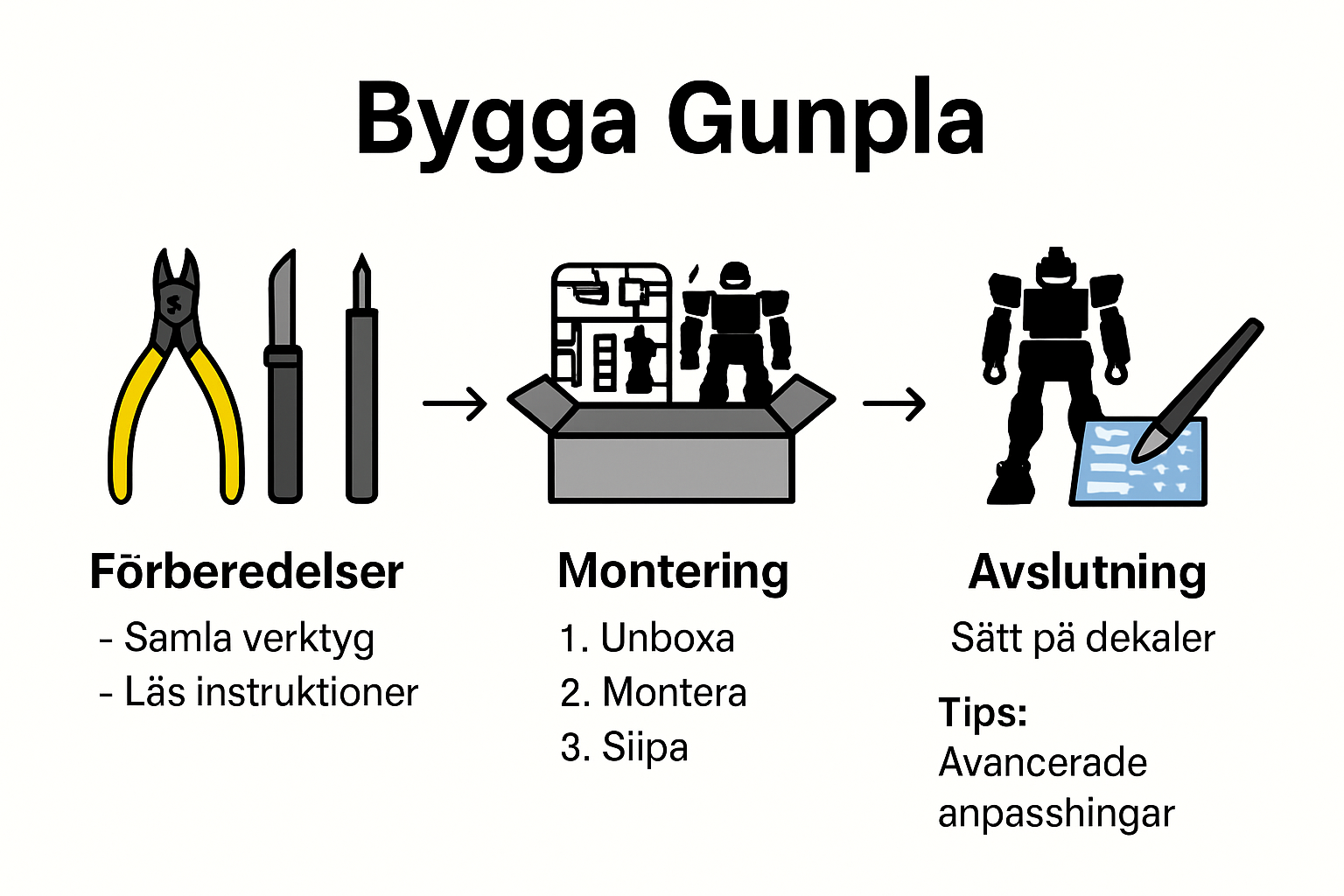
Before you start building, preparation is crucial. Create a clean, well-lit workspace with all your tools within reach. Read through the instructions carefully and sort the parts by color or size. This helps you stay organized and reduces the risk of confusion during the build. Plastic parts usually come on molded frames called runners, and you need to carefully detach each part with your nippers.
When detaching the parts, it's important to cut a bit away from the part itself to avoid damage. Leave a small piece of plastic behind that can then be sanded off with a hobby knife. Be extra careful with the smallest parts and use tweezers to handle them. Clean off any small plastic nubs or imperfections to ensure a neat and professional finish.
Assembly methods and techniques
The assembly process requires patience and precision. Most Gunpla models are designed to snap together without glue, making them perfect for beginners. Follow the instructions step by step and be careful when pushing the parts together. Too much pressure can cause damage or deformation. Explore the complexity of the Gundam universe to understand the historical and technical aspects behind each model.
An important tip is to rotate the model frequently during assembly to ensure all parts fit perfectly. Some parts may need slight sanding to fit smoothly. Use sanding tools with different grit densities - start coarse and finish with ultra-fine sanding for a smooth finish. Pay special attention to joints and articulation points to ensure smooth movement.
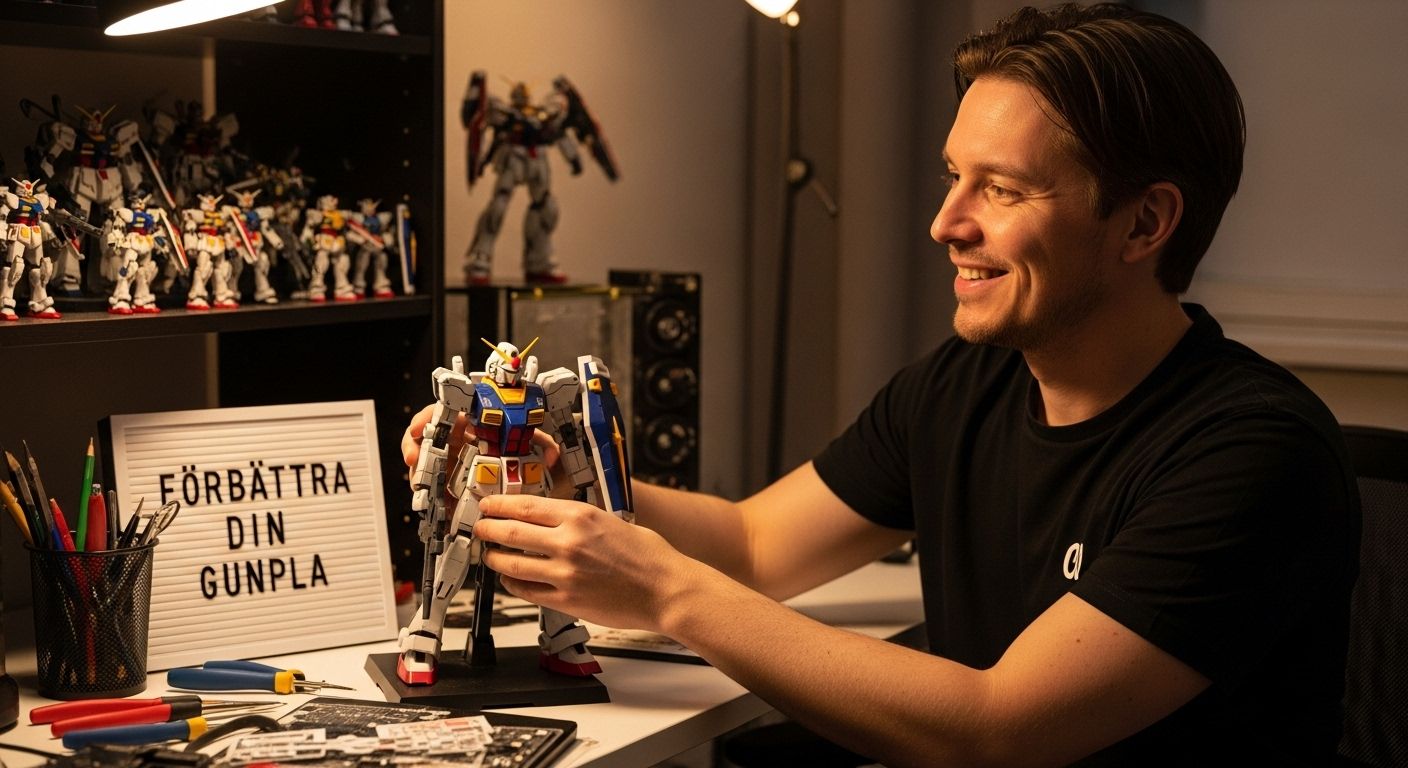
For those who want to take their Gunpla build to the next level, several advanced techniques are available. Panel lining involves using thin pens or washes to accentuate details and create depth. Color modification can transform a standard model into a unique work of art. Some enthusiasts use an airbrush for smooth, professional paint layers, while others prefer brush painting for more control.
Regardless of your skill level, the key is to have fun and be patient with yourself. Every Gunpla build is a learning process. Document your journey by taking photos, sharing your progress in community forums, and learning from other enthusiasts. Don't forget that every small detail and every small mistake is part of your unique Gunpla story. Continue to experiment, learn, and above all - enjoy the process.
Frequently Asked Questions
What is Gunpla and what does the term mean?
Gunpla is short for "Gundam Plastic Model" and refers to plastic model kits depicting robots from the Gundam universe. These models are popular among both beginners and experienced model builders due to their detail and customization possibilities.
What difficulty levels of Gunpla are there and which one should I choose as a beginner?
Gunpla models come in several difficulty levels, including Entry Grade (EG), High Grade (HG), Master Grade (MG), Real Grade (RG), and Perfect Grade (PG). Beginners are recommended to start with Entry Grade or early High Grade models, as they are simpler and require fewer tools.
What tools do I need to build Gunpla models?
To start building Gunpla, you need some basic tools: nippers, a hobby knife, a cutting mat, and possibly tweezers. These tools help you handle and assemble the parts efficiently.
How can I improve my Gunpla models after the building process?
Improve your models through techniques such as panel lining to highlight details, painting the models to give them a personal touch, and using sanding tools to achieve a smooth finish. Advanced builders can also experiment with airbrushing techniques for a professional look.
Unleash your creativity with Gunpla and Robotto.se
Are you looking for your very first Gunpla model but are unsure which kits, tools, or accessories suit your needs? In the article "Starting with Gunpla – a simple guide for beginners and enthusiasts," you'll learn everything about difficulty levels, choosing the right model, and which tools truly make a difference. Many beginners worry about buying the wrong things or starting with models that are too difficult to handle, but at Robotto.se, you'll find both beginner-friendly sets and expert-recommended accessories all in one place.
The joy of building begins with the right conditions. Choose from hundreds of Gunpla, accessories, and unique collectibles to take your hobby to the next level. Discover current promotions and find your favorite model directly in our range of Gundam kits and accessories or seek inspiration among our news and product updates today. Click in now and experience the advantage of a complete hobby store – your Gunpla journey starts here.
Recommended
- Prominent Women in the Mobile Suit Gundam Universe – Robotto
- A Deep Dive into Mobile Suit Gundam Fan Culture – Robotto
- Mobile Suit Gundam: A Cultural Icon – Robotto
- Exploring the Design Aspects of Mobile Suit Gundam Robots – Robotto
- Creating is Expensive - How to Spread the Cost Without Sacrificing Quality – Runns